The island countries
Archipelagos
Found an island country and decide what it will build, defend and share.
Read the founders’ letterSee what to print
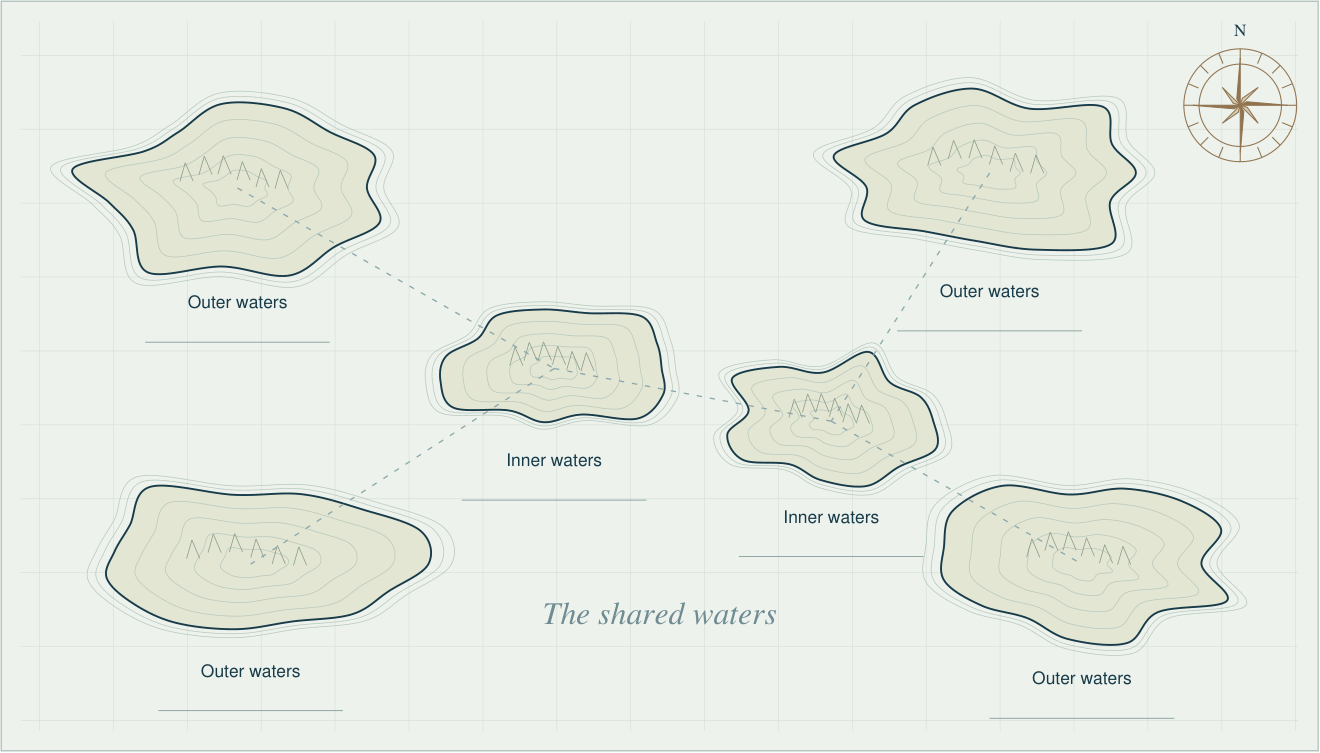
The richer outer islands face direct pirate attacks. Sheltered inner islands initially have less reason to pay for protection. A threatened trade route, a bargain or a new event can change that.
Write your founders’ account and bring it to the Dominus Mundi, who answers for the surrounding world. Each country keeps its own maps, letters and accounts.
Open the printable guideOpen the editable guide
Edition 21. Country papers and open commissions, with keeper instructions, worked cases, study records and reference works. The printing guide identifies the pages and copies needed for play.
A letter to the founders
The first landfall
Write your founders’ arrival and the first work they plan to begin.
To the founders,
Your shore is still unnamed on the shared chart. What shall I call it?
Send me the story of your arrival. What did your people find here, and what did they bring? Explain where their tools, supplies and skills came from. Draw the places in your account. What do your people need first, and how will they obtain it?
I will read your account and ask about the work you propose. Your answer will help determine what your people can build or obtain.
Dominus Mundi
Begin with the landfall, chart and first undertaking in the country papers, then bring your proposal to the council. The complete text is also available.
Edition 21 country papers
Print 13 sheets per country
Use the page numbers shown in the PDF viewer. A country can be played by a group or one person.
| Paper | PDF page | Copies |
|---|---|---|
| Contents | 2 | 1 |
| First landfall | 4 | 1 |
| Island chart | 5 | 1 |
| Undertaking | 6 | 3 |
| Council notice | 7 | 1 |
| Correspondence | 8 | 2 |
| News report | 9 | 1 |
| Accounts | 10 | 2 |
| Country history | 16 | 1 |
Keep a shared class copy of the preparation guide on PDF page 3 and the shared chart on PDF page 11. The guide lists the occasional papers and commissions to print when assigned.
Customs of the common register
How a plan is decided
Agree what will determine the result before a project, journey or conflict begins.
- A uses the recorded conditions.
- Resources, technology, terrain and existing commitments determine what each side can do.
- B adds a die roll.
- Use the actual cast, with an announced target and justified condition modifiers.
- C examines the explanation.
- Explain who acts, where, with what available means and why the plan could work. Develop the answer after a question.
Agree the basis for deciding an action and understand its known costs before committing. Develop your answer to the question your plan raises. Record the confirmed result and carry it into the next decision.
A, B and C can work alone or together. The teacher can choose the island arrangement, rounds, numerical settings and ending for the campaign. The earlier numerical model remains an optional example and enters play through explicit adoption.
Choose your country’s government and ideals. Rulings follow its actual powers, resources and actions. A government name earns no automatic bonus.
An optional reader of the atlas
Let your AI follow the campaign
Give it the whole game and the current records so it can suggest a scenario grounded in the paths your players have taken.
Archipelagos is complete without AI. The human DM can introduce every event and resolve every round. This briefing adds scenario suggestions to the same game. The DM decides which suggestions enter play, and the players choose their own response.
The Archipelagos * download contains the matching complete guide text, figure descriptions, current scenario rules and the separate earlier numerical example, with instructions for optional scenario support. The separate civilization game is Dominium Mundi and uses its own DM*. Add the students’ actual descriptions, the chosen resolution methods, current charters, accounts, maps, agreements, rulings and unresolved proposals. Attach actual map images to your AI conversation when their positions matter.
Attach the briefing to the AI you use and ask for a scenario suggestion. Check the starting facts before introducing it. An AI suggestion alone changes no campaign fact, rule or account. Share updated records when you return to the conversation.
Read the complete Archipelagos *Edition 11 guide for an existing campaignRead its structured versionRead the campaign record format
Learning through the country’s records
Follow a decision into its consequences
Use the administrative section to select a curriculum inquiry and the individual evidence it requires.
The complete guide keeps facilitation, assessment, Ontario and IB course applications, research discussions and full references after the game. Its worked examples and assigned cases are labelled separately from a campaign’s actual history. Country success supplies evidence to analyse, while individual explanations establish the work to be assessed.
Read the guide and its sources or return to teacher resources.