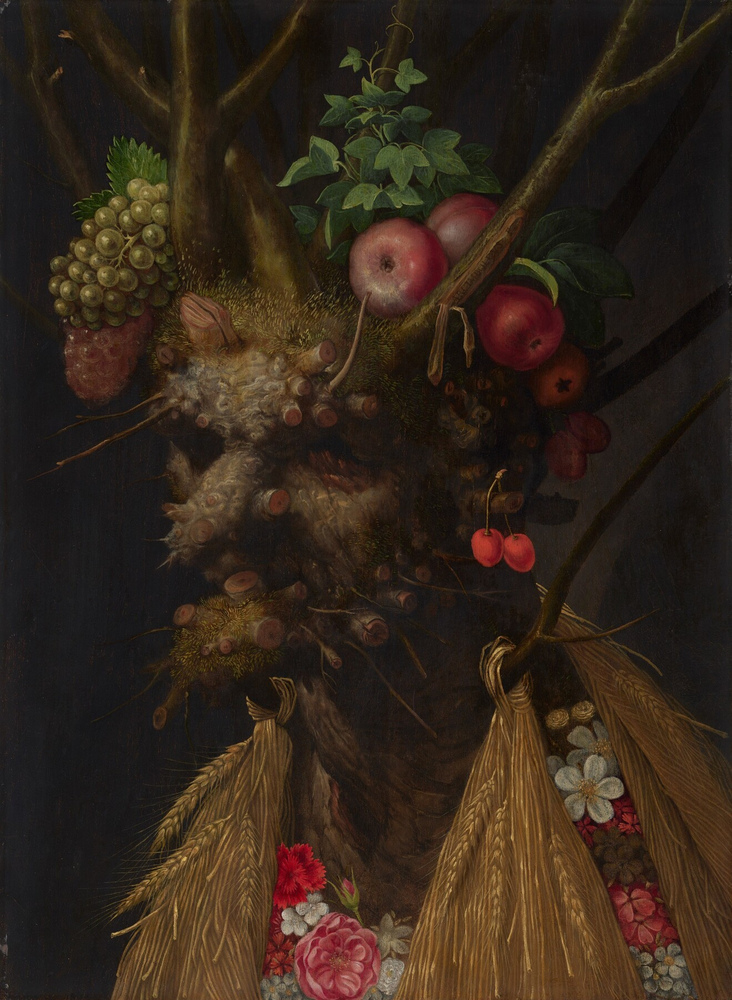
A21 · Four Seasons in One Head
 A21 ↗
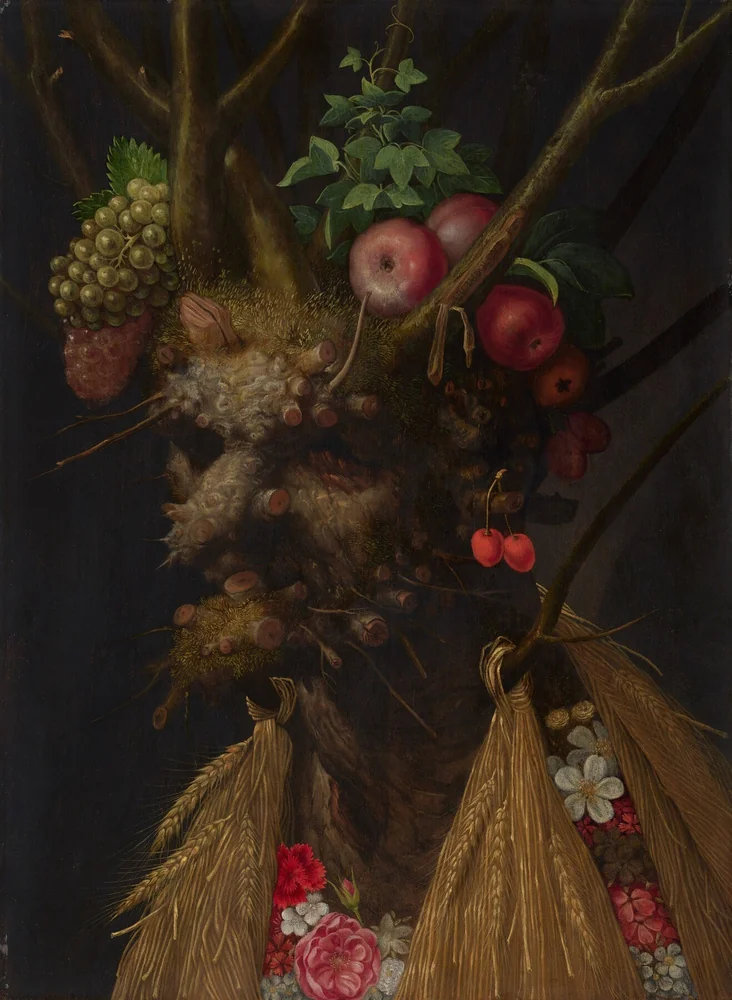
Maker and date. Giuseppe Arcimboldo · c. 1590
Object and leaf. National Gallery of Art accession 2010.77.1; NGA artwork 142008. Complete painting; signature ARCIMBOLDUS F on branch
Context. The museum identifies this as an oil painting combining tree, fruit, flowers and grain into a single head. The historical work concerns the seasons; its use for the reader’s synthesis is our proposal.
Jung relation. No documented Jung relationship established for this painting. Proposed relation: one form made from distinct particulars; the child supplies every hero and reason.
Credit and reuse. Giuseppe Arcimboldo, Four Seasons in One Head, c. 1590, oil on panel. National Gallery of Art, Washington, Paul Mellon Fund, 2010.77.1. Public domain. Public domain; NGA Open Access
Place and reason. Letter 1. The image makes synthesis visible exactly where hero reasons become bodily particulars. Its head is an example of joining, never a character template to copy.
https://www.nga.gov/artworks/142008-four-seasons-one-head
https://api.nga.gov/iiif/bbb48182-d0e5-4a88-8759-6dda58d05d90/full/!1800,1800/0/default.jpg
https://www.nga.gov/terms-and-notices
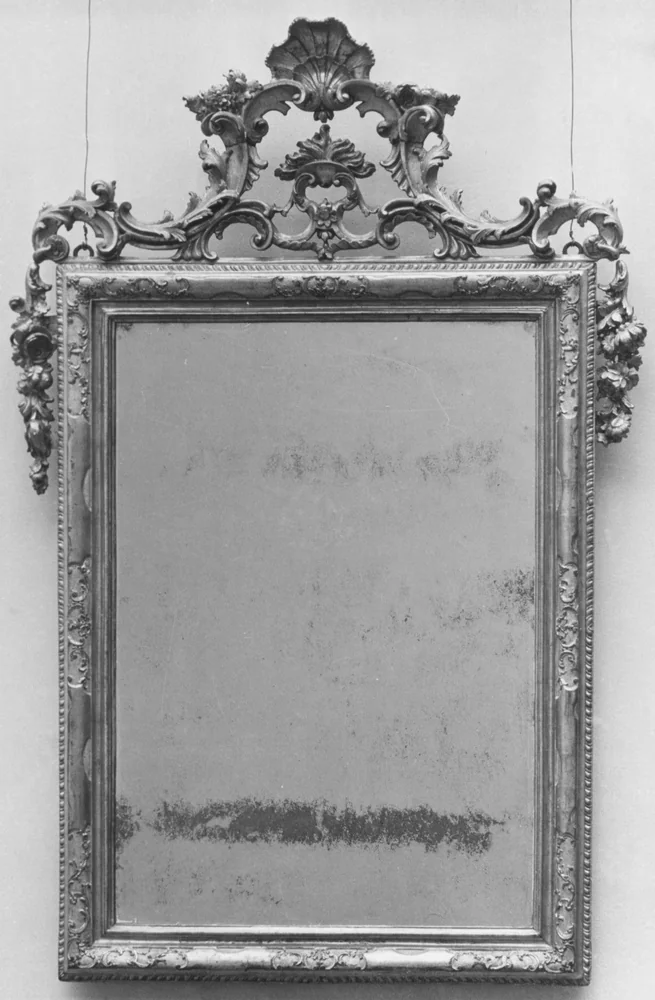
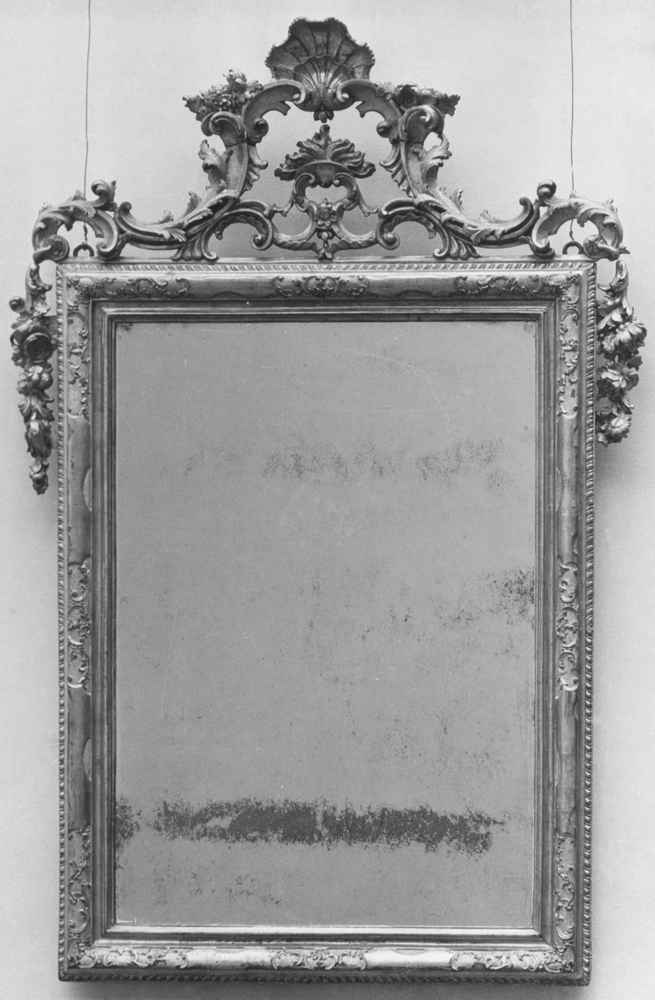
S01 · Mirror
 S01 ↗
Maker and date. Unidentified Venetian maker · early 18th century
Object and leaf. 25.140.4. The Metropolitan Museum of Art, accession 25.140.4; digital object 195354
Context. An Italian, Venetian mirror dated early 18th century; the catalogue records carved and gilded wood. The photographed surface is aged and unoccupied.
Jung relation. Proposed BB design analogy; no evidence retrieved that Jung used this exact object. Historical context and the reader’s authored fictional meaning remain distinct.
Credit and reuse. Mirror. The Metropolitan Museum of Art, Fletcher Fund, 1925, 25.140.4. Public domain. Public domain; The Met Open Access (CC0)
Place and reason. Letter 1. At the moment a chosen reason becomes a visible body, the unused mirror surface invites the reader to supply the appearance. It belongs beside the portrait rather than as a detached emblem.
https://www.metmuseum.org/art/collection/search/195354
https://images.metmuseum.org/CRDImages/es/original/61598.jpg
https://creativecommons.org/publicdomain/zero/1.0/
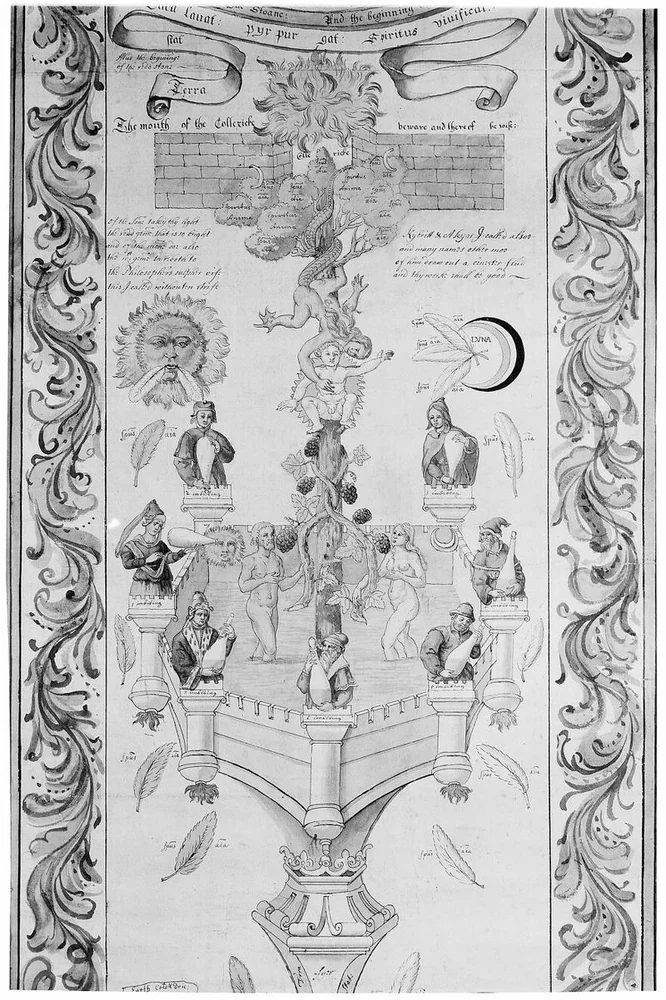
J09 · M0010602: Fountain supported by a column with many symbolic accessory figures, from an alchemical scroll: Rotulum hieroglyphicum G. Riplaei Equitis Aurati
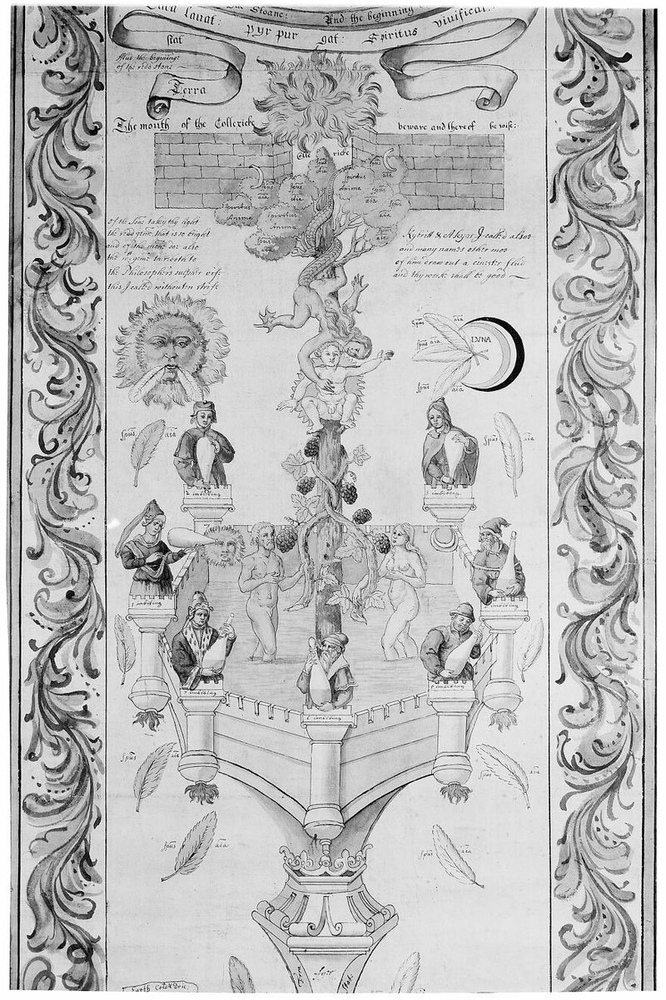 J09 ↗
Maker and date. Photographer unrecorded in the retrieved catalogue; historical scroll associated with George Ripley · 12 May 1948, photograph date; the scroll is older
Object and leaf. Wellcome Collection WT/D/1/20/1/93/77, M0010602; depicted manuscript MS.692
Context. Glass-plate photographic-library image of the upper part of the second of five scroll panels. The catalogue describes the manuscript as a copy of a copy made in 1588 and distinguishes this 1948 photograph from the historical manuscript.
Jung relation. Historical alchemical visual material. No direct use of this photograph by Jung was established.
Credit and reuse. M0010602, Fountain supported by a column with many symbolic accessory figures, photograph, 12 May 1948. Wellcome Collection WT/D/1/20/1/93/77, depicting MS.692. Public Domain Mark. https://wellcomecollection.org/works/vsje5ycb Public Domain Mark
Place and reason. Letter 1. The linked fountain structure joins naming, the hero list and an open space for the first character marks. Letter 3. Its channels accompany a voice or gesture reaching another Bookworm. Letter 5. Its connected figures accompany the reader’s response to the interruption and a trace carried into later play.
https://wellcomecollection.org/works/vsje5ycb
https://iiif.wellcomecollection.org/image/b33341473_0001.jp2/full/800,/0/default.jpg
https://creativecommons.org/publicdomain/mark/1.0/
A22 · Atalanta fugiens, Emblema 6: Sowing gold in white foliated earth
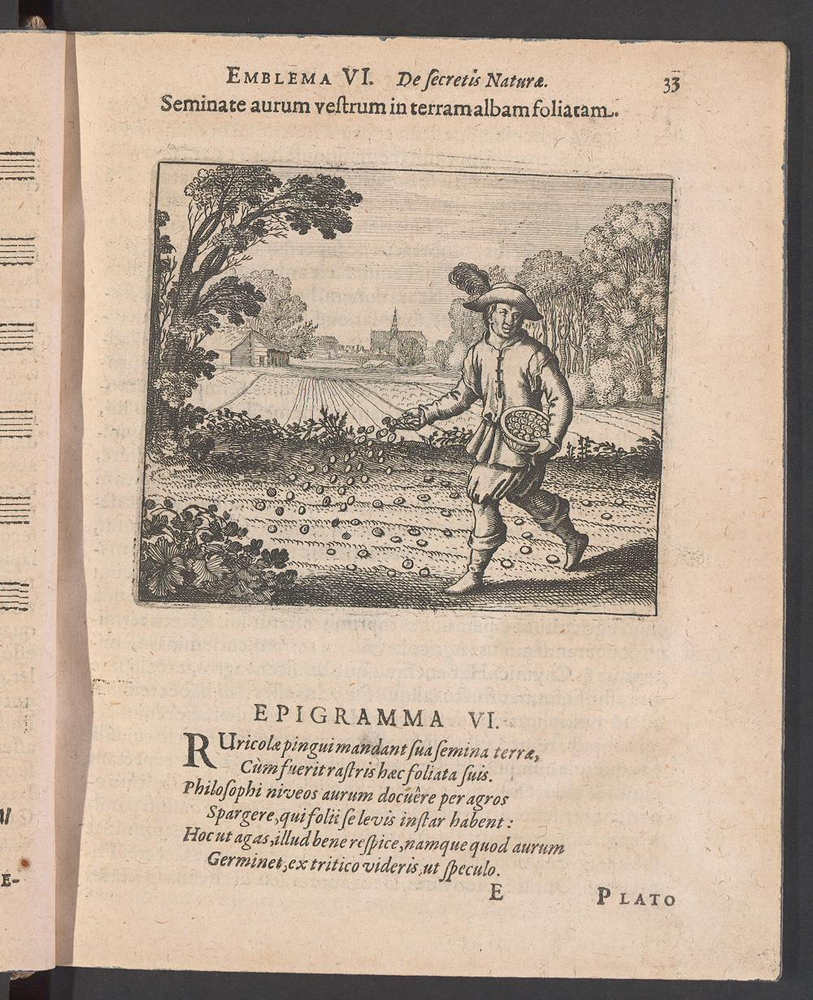 A22 ↗
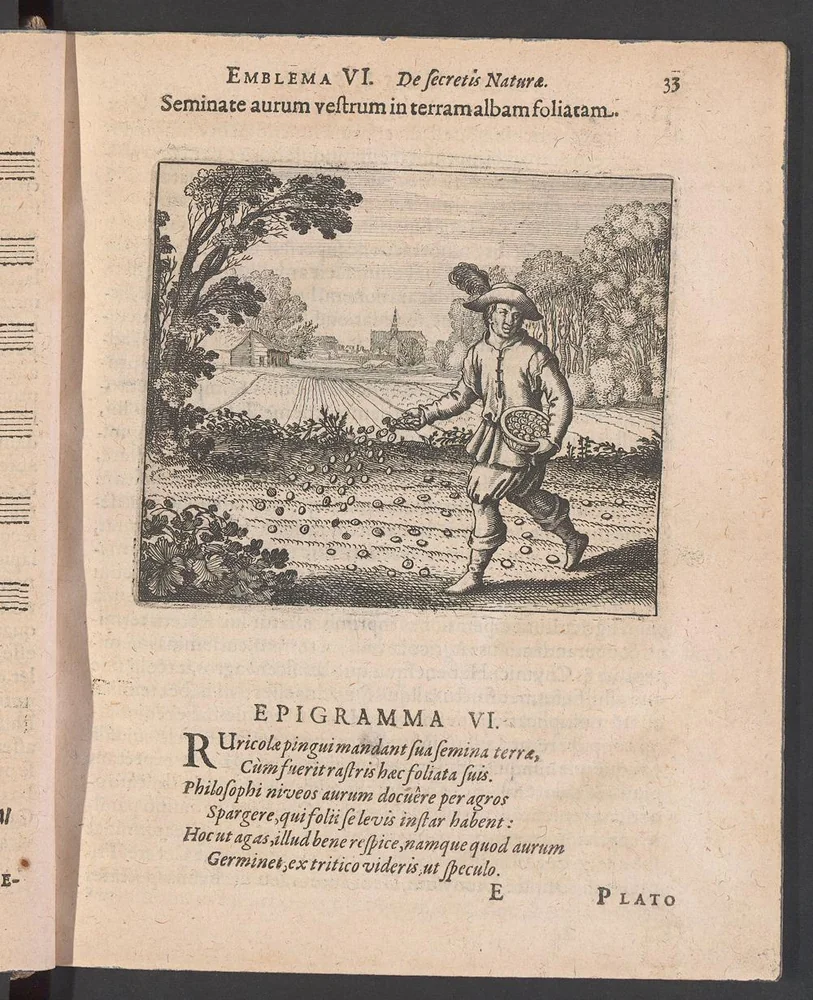
Maker and date. Michael Maier (author); copperplate engraver not named in this e-rara record · 1617
Object and leaf. e-rara 1905969; leaf image 1906012; VD17 1:078836Y. Emblem 6; printed p. 33; IIIF canvas label 33; image ID 1906012
Context. The actual leaf reads Emblema VI, p. 33. Its motto concerns sowing gold in prepared white earth. The engraving is an alchemical agricultural analogy; the reader’s hero-to-feature relation is a separate proposed use.
Jung relation. Documented provenance: digitized copy held by Stiftung der Werke von C. G. Jung, Zürich. This register makes no claim that Jung used this particular plate. The proposed classroom relation is interpretive, not documentary evidence of Jung’s usage.
Credit and reuse. Michael Maier, Atalanta fugiens (Oppenheim, 1617), emblem 6, p. 33. Stiftung der Werke von C. G. Jung, Zürich; e-rara, https://doi.org/10.3931/e-rara-7300. Public Domain Mark. Public Domain Mark 1.0
Place and reason. Letter 1. The scattered seeds give many possible beginnings without prescribing a species, trait or hero. Pairing with A21 turns a list of admired people into an authored combination; A23 later recalls the chosen mark.
Displayed detail. Letter 1 uses a detail [0.12, 0.23, 0.8, 0.4] of the full image, measured from its top-left corner as fractions of width and height.
https://www.e-rara.ch/cgj/content/titleinfo/1905969
https://www.e-rara.ch/download/webcache/1000/1906012
https://creativecommons.org/publicdomain/mark/1.0/
https://doi.org/10.3931/e-rara-7300
J03 · The Hermetic androgyne; representing the stages of the alchemical Work in One
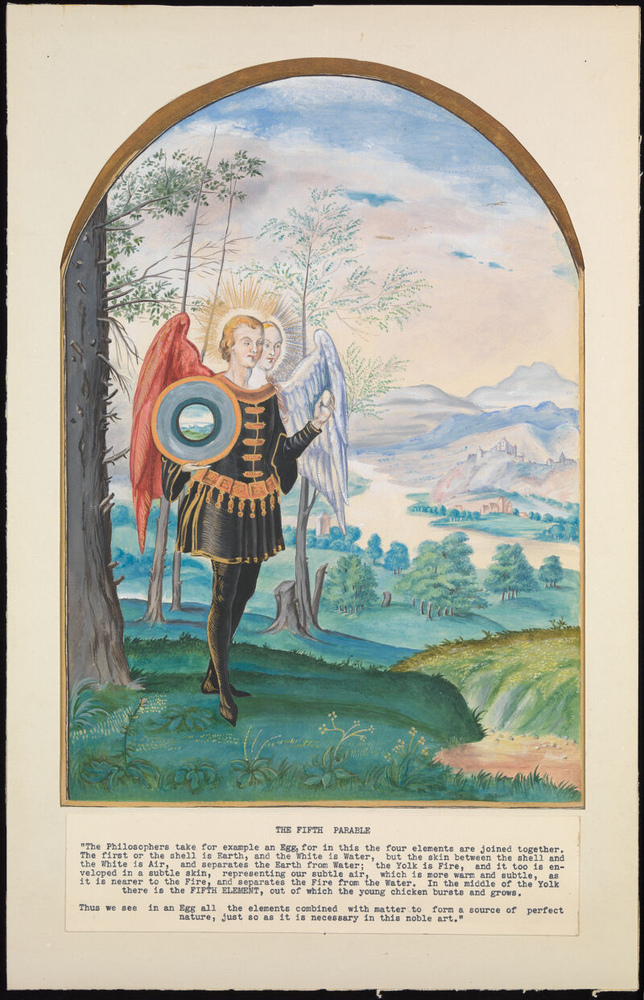 J03 ↗
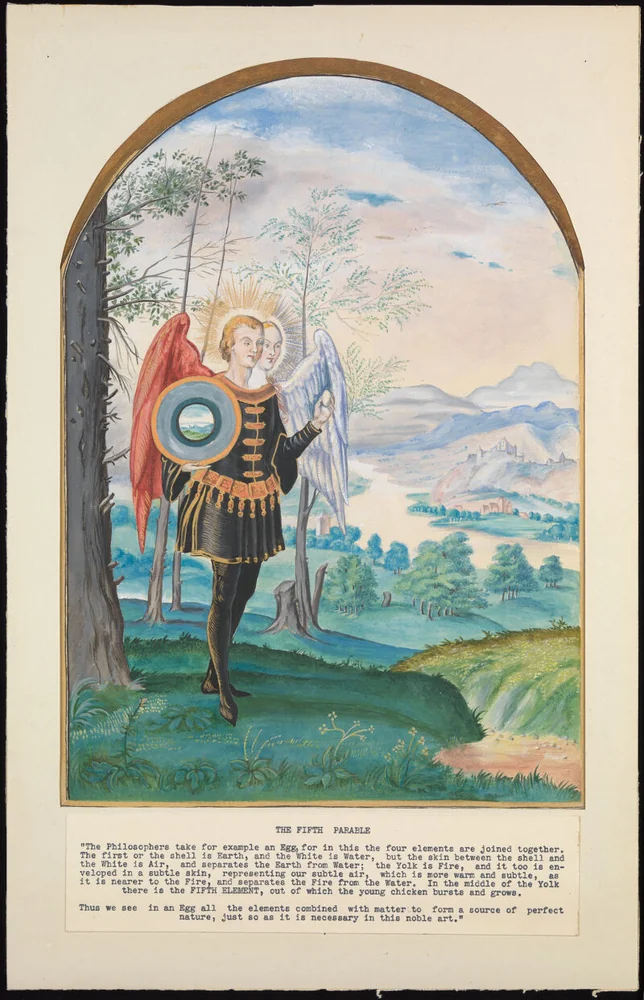
Maker and date. Edith Annie Ibbs (1863–1937), after Splendor solis · 1900–1909; commissioned circa 1907
Object and leaf. Wellcome Collection 38739i
Context. Watercolour commissioned for Henry Wellcome's Historical Medical Exhibition, after the 1582 Splendor solis manuscript, British Library Harley MS 3469. This is Ibbs's later reproduction, not the sixteenth-century manuscript itself.
Jung relation. Alchemical visual material. No evidence retrieved that Jung used this particular Ibbs watercolour.
Credit and reuse. Edith Annie Ibbs, The Hermetic androgyne, 1900–1909, after Splendor solis. Wellcome Collection 38739i. CC BY 4.0. https://wellcomecollection.org/works/prmankg3 Creative Commons Attribution 4.0 International
Place and reason. Letter 1. The combined figure accompanies the hero reason becoming a chosen body part. Letter 2. The same combined figure returns when a chosen part joins the body already there. Letter 4. The combined figure returns beside two influences meeting in one chosen action.
https://wellcomecollection.org/works/prmankg3
https://iiif.wellcomecollection.org/image/b11965642_L0077030.JP2/full/800,/0/default.jpg
https://creativecommons.org/licenses/by/4.0/
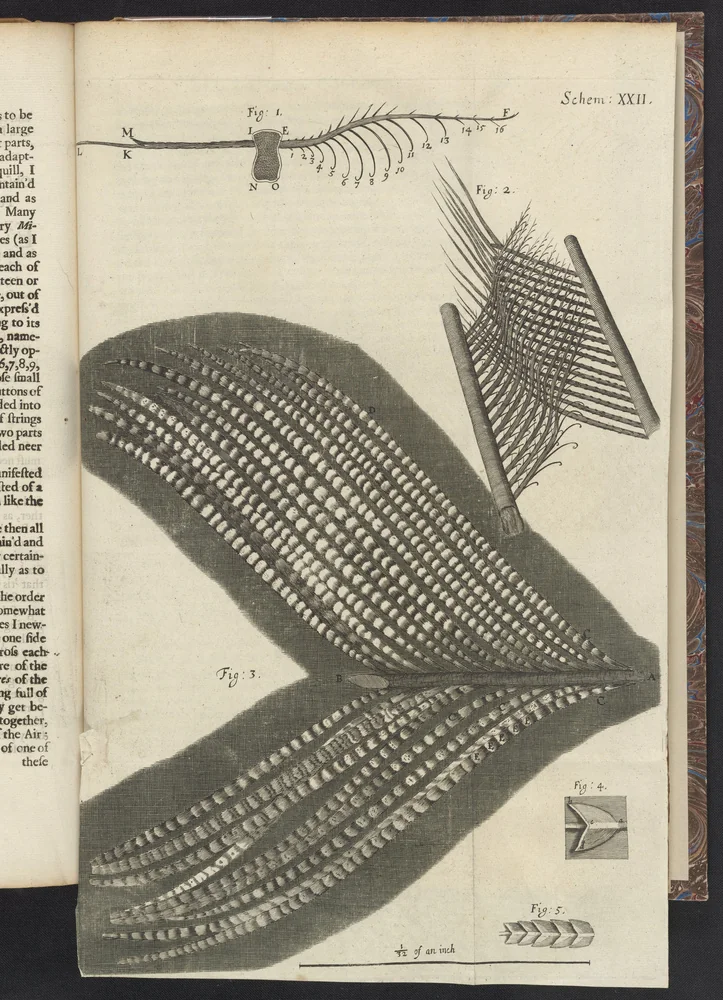
N02 · Microscopic view of assorted feathers
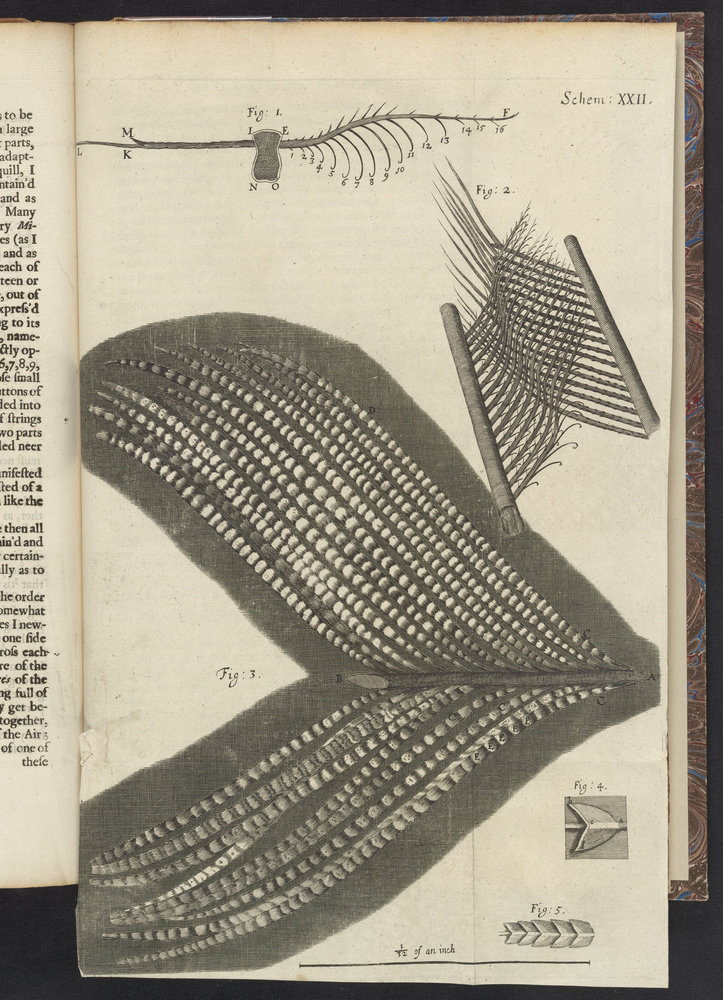 N02 ↗
Maker and date. Robert Hooke, author; J. Allestry and J. Martyn, printers · 1665
Object and leaf. SHI work 2b88qd390; image 9019s342r. Micrographia, first edition, Schem. XXII; Observations XXXV–XXXVI.
Context. Hooke’s engraved scientific illustrations compare feather structures, including peacock and duck feathers. The source describes magnified physical structures, not personality emblems.
Jung relation. BB visual-design analogy only. No documented Jung-specific meaning is claimed for this image; the reader supplies any character meaning.
Credit and reuse. Courtesy of Science History Institute. Public Domain Mark 1.0
Place and reason. Letter 1. It moves the existing phoenix feather from a broad emblem toward particulars the child can select and describe.
https://digital.sciencehistory.org/works/2b88qd390
https://digital.sciencehistory.org/downloads/deriv/9019s342r/download_large
https://creativecommons.org/publicdomain/mark/1.0/
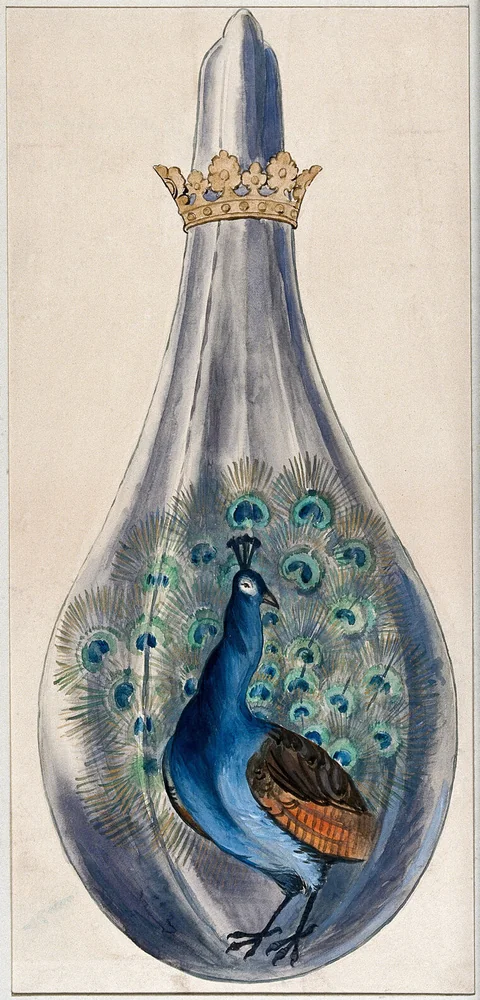
J05 · A peacock in a crowned alchemical flask
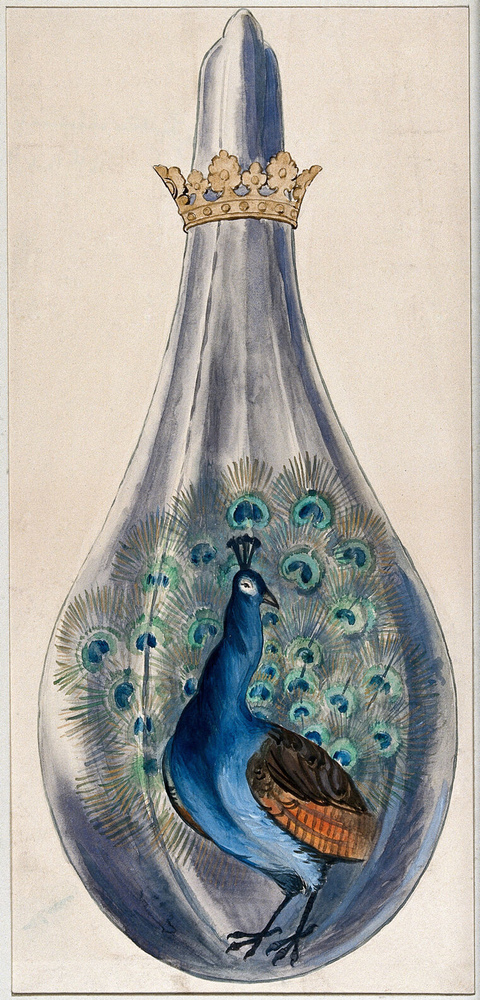 J05 ↗
Maker and date. Edith Annie Ibbs (1863–1937), after Splendor solis · 1900–1909; commissioned circa 1907
Object and leaf. Wellcome Collection 38825i
Context. Ibbs watercolour after Splendor solis, 1582, British Library Harley MS 3469. The catalogue describes an alchemical stage when material breaks out into many colours.
Jung relation. Alchemical colour-transformation imagery. No evidence retrieved that Jung used this particular Ibbs watercolour.
Credit and reuse. Edith Annie Ibbs, A peacock in a crowned alchemical flask, 1900–1909, after Splendor solis. Wellcome Collection 38825i. Public Domain Mark. https://wellcomecollection.org/works/pyhb4hmk Public Domain Mark
Place and reason. Letter 1. The peacock and flask offer colours and surfaces beside the reader’s chosen bodily particular.
https://wellcomecollection.org/works/pyhb4hmk
https://iiif.wellcomecollection.org/image/V0025638/full/760,/0/default.jpg
https://creativecommons.org/publicdomain/mark/1.0/
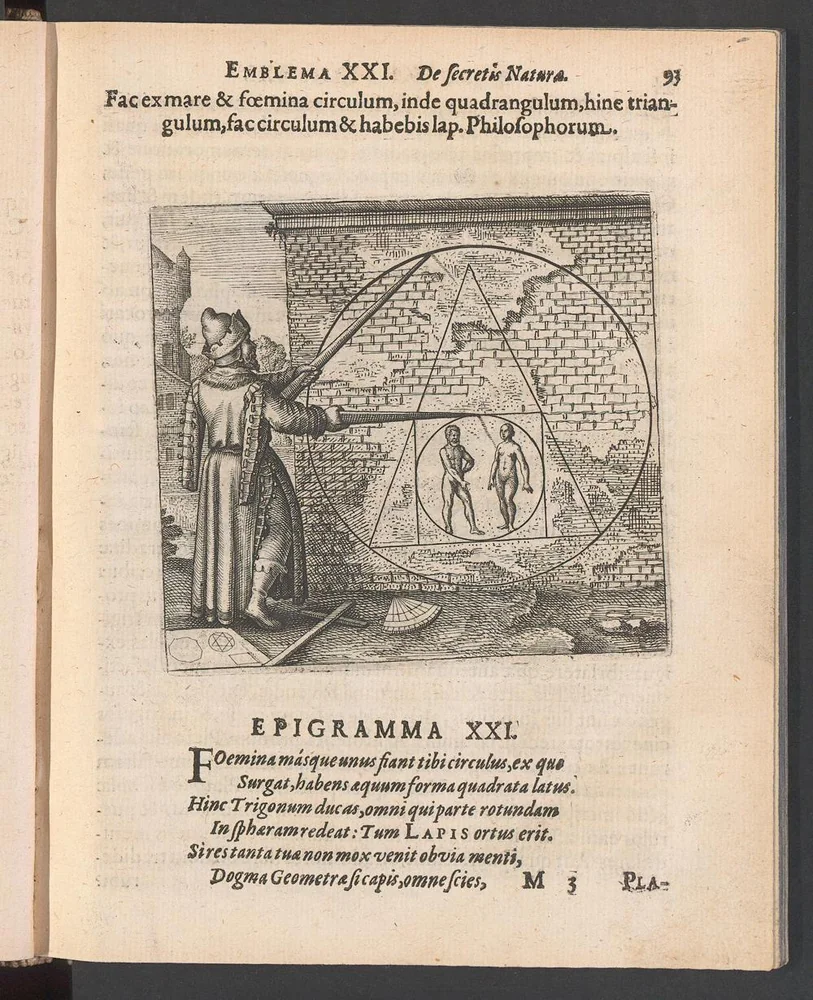
A24 · Atalanta fugiens, Emblema 21: Compass, circle, square and triangle
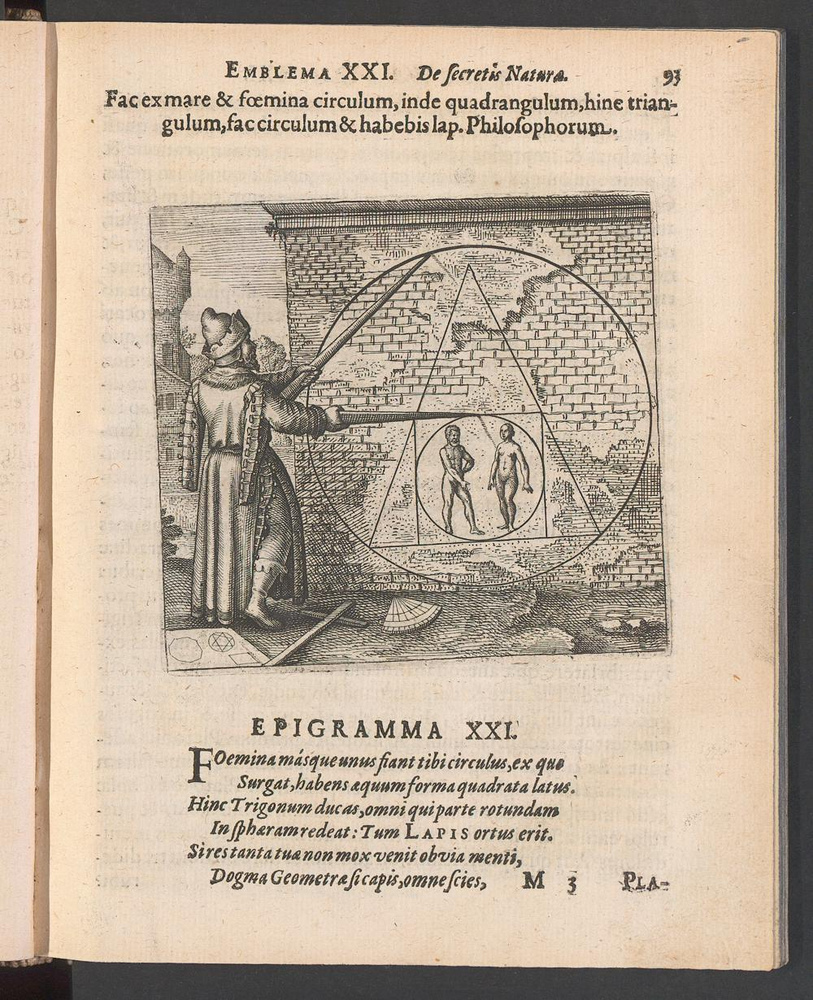 A24 ↗
Maker and date. Michael Maier (author); copperplate engraver not named in this e-rara record · 1617
Object and leaf. e-rara 1905969; leaf image 1906072; VD17 1:078836Y. Emblem 21; printed p. 93; IIIF canvas label 93; image ID 1906072
Context. The exact source is Emblema XXI, printed p. 93. Its motto connects a male–female pair with the nested geometric construction and philosophers’ stone. The historical paired-sex formula is not a rule for the child’s character; the proposed use concerns reader-authored joining.
Jung relation. Documented provenance: digitized copy held by Stiftung der Werke von C. G. Jung, Zürich. This register makes no claim that Jung used this particular plate. The proposed classroom relation is interpretive, not documentary evidence of Jung’s usage.
Credit and reuse. Michael Maier, Atalanta fugiens (Oppenheim, 1617), emblem 21, p. 93. Stiftung der Werke von C. G. Jung, Zürich; e-rara, https://doi.org/10.3931/e-rara-7300. Public Domain Mark. Public Domain Mark 1.0
Place and reason. Letter 2. The compass makes construction visible while nested forms preserve distinctions within one composition. It belongs where the chosen hero contribution joins the existing Bookworm, whether this is a first hero-derived part or a later addition.
Displayed detail. Letter 2 uses a shaped compass-holder and upper-geometry detail. Bounding rectangle [0.18, 0.24, 0.65, 0.43] is measured from the full image’s top-left as fractions of width and height. The clipping polygon [[0, 0], [1, 0], [1, 0.42], [0.415, 0.42], [0.415, 1], [0, 1]] is measured within that rectangle.
https://www.e-rara.ch/cgj/content/titleinfo/1905969
https://www.e-rara.ch/download/webcache/1000/1906072
https://creativecommons.org/publicdomain/mark/1.0/
https://doi.org/10.3931/e-rara-7300
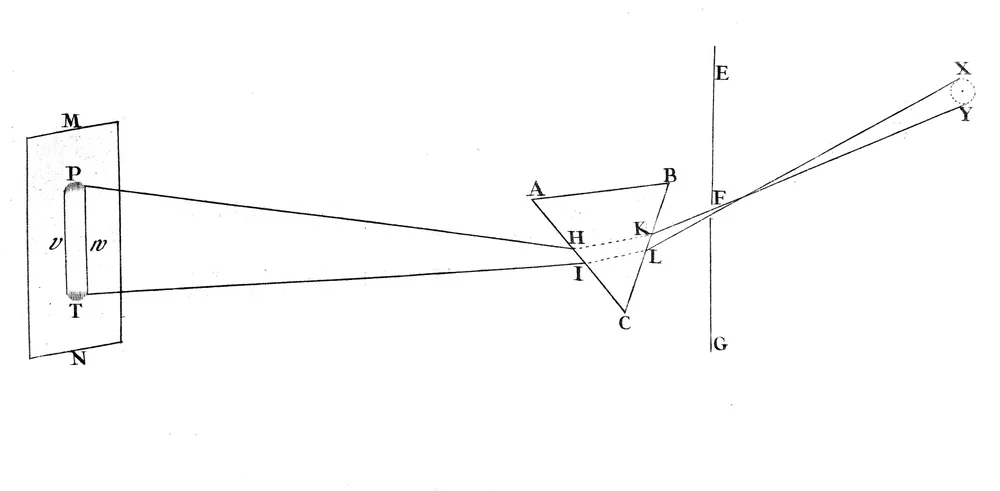
S07 · M0010896: Production of spectrum by refraction at a prism
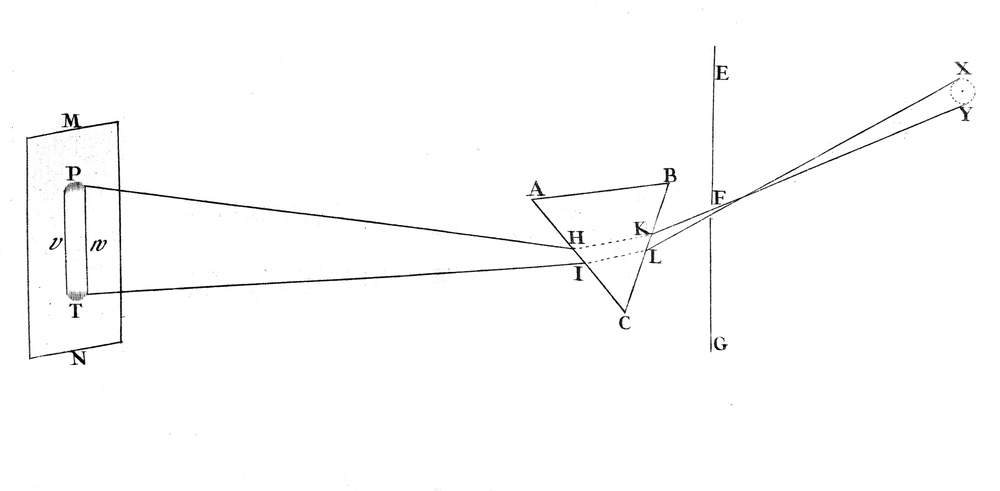 S07 ↗
Maker and date. Unidentified photographer; diagram reproduced from Isaac Newton’s Opticks (London, 1721) · December 1948 photograph of a diagram from the 1721 edition of Opticks
Object and leaf. WT/D/1/20/1/96/60; image M0010896. Wellcome Trust Corporate Archive, photographic library “M” series, WT/D/1/20/1/96/60
Context. Wellcome describes a December 1948 glass-plate photograph of a diagram from Isaac Newton’s Opticks, London, W. and J. Innys, 1721. The catalogue dates the photograph, not Newton’s diagram, to 1948.
Jung relation. Proposed BB design analogy; no evidence retrieved that Jung used this exact diagram. Optics supplies the documented context; the character relationship is reader-authored.
Credit and reuse. M0010896: Production of spectrum by refraction at a prism. Public Domain Mark. Source: Wellcome Collection. Public Domain Mark
Place and reason. Letter 2. The letter explicitly changes the light. The prism diagram gives that change a concrete visual partner, while the existing rainbow picture supplies colour and the player supplies the new particular.
https://wellcomecollection.org/works/brdptc68
https://iiif.wellcomecollection.org/image/M0010896/full/full/0/default.jpg
https://creativecommons.org/publicdomain/mark/1.0/
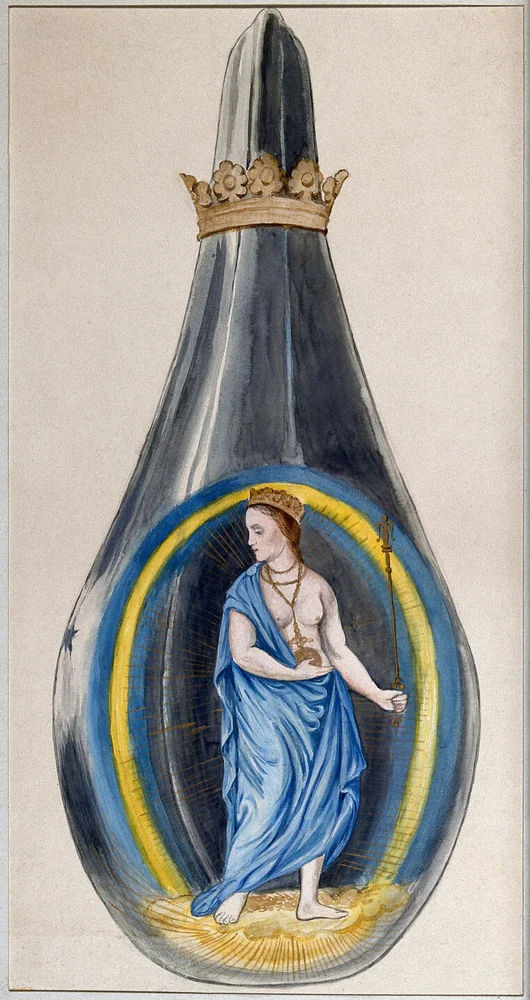
J06 · A queen dressed in blue, representing mercury, in a crowned alchemical flask
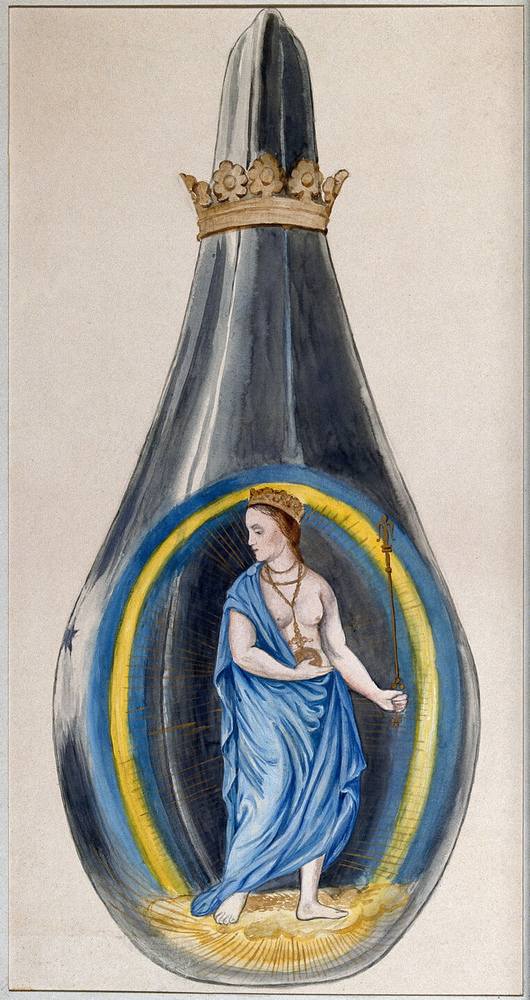 J06 ↗
Maker and date. Edith Annie Ibbs (1863–1937), after Splendor solis · 1900–1909; commissioned circa 1907
Object and leaf. Wellcome Collection 38826i
Context. Ibbs watercolour after Splendor solis, 1582, British Library Harley MS 3469. The catalogue identifies mercury and a yellow-and-blue rainbow.
Jung relation. Alchemical mercury and colour imagery. No evidence retrieved that Jung used this particular Ibbs watercolour.
Credit and reuse. Edith Annie Ibbs, A queen dressed in blue, representing mercury, in a crowned alchemical flask, 1900–1909, after Splendor solis. Wellcome Collection 38826i. Public Domain Mark. https://wellcomecollection.org/works/axmeb4an Public Domain Mark
Place and reason. Letter 2. The rainbow surrounding one figure accompanies a chosen colour, pattern or another view of the existing body. Letter 5. The same enclosed figure meets the interrupted introduction, where an individual reason can still be heard.
https://wellcomecollection.org/works/axmeb4an
https://iiif.wellcomecollection.org/image/V0025639/full/760,/0/default.jpg
https://creativecommons.org/publicdomain/mark/1.0/
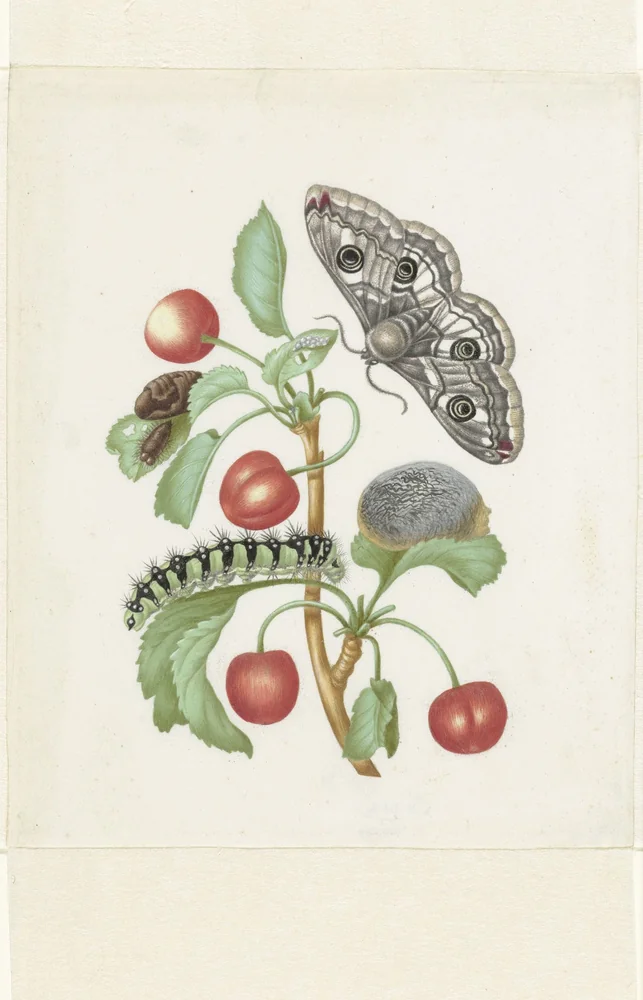
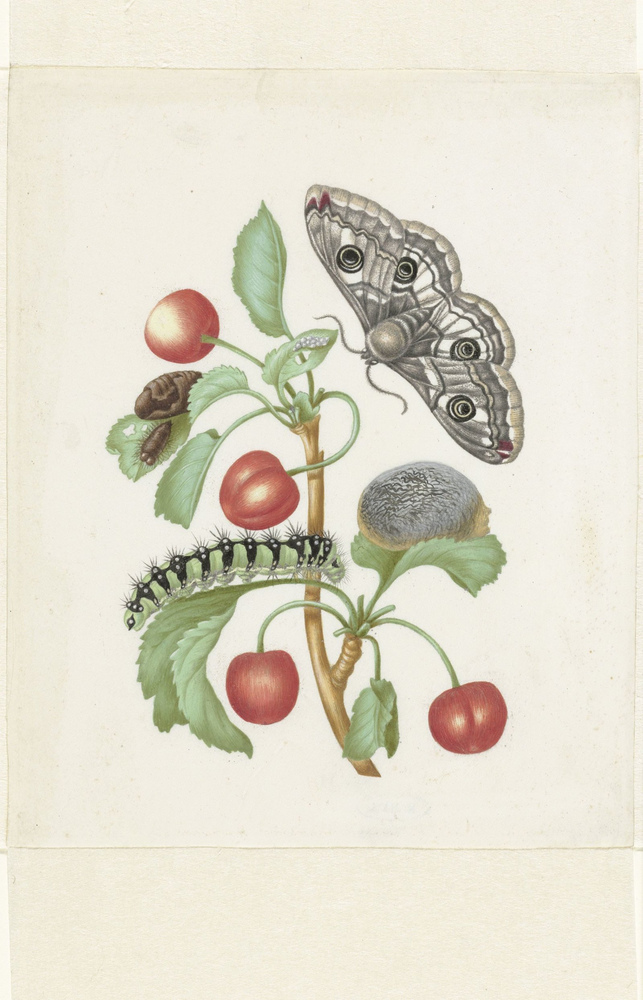
N01 · Lifecycle of the night peacock butterfly / Metamorphosis of a Small Emperor Moth
 N01 ↗
Maker and date. Workshop of Maria Sibylla Merian; attributed to Dorothea Maria Gsell · After 1679
Object and leaf. RP-T-1946-73; https://id.rijksmuseum.nl/200142552. Complete drawing on vellum; catalogue connects it with Rupsenboek I, plate 23. Image service YcjlL.
Context. The museum identifies a partial copy after a drawing used for plate 23 of Merian’s first caterpillar book. A cherry branch holds moth, caterpillar and cocoon forms; authorship remains qualified as in the record.
Jung relation. BB visual-design analogy only. No documented Jung-specific meaning is claimed for this image; the reader supplies any character meaning.
Credit and reuse. Rijksmuseum, Amsterdam; purchased 1946, RP-T-1946-73. Public domain
Place and reason. Letter 2. The several forms make comparison available at the moment a new feature joins the same character. They supply visual possibilities without assigning a developmental stage.
https://www.rijksmuseum.nl/en/collection/object/Lifecycle-of-the-night-peacock-butterfly--53878ea1d2ee2ab9d3a0e8cae00aac4c
https://iiif.micr.io/YcjlL/full/1600,/0/default.jpg?download=1
https://creativecommons.org/publicdomain/mark/1.0/
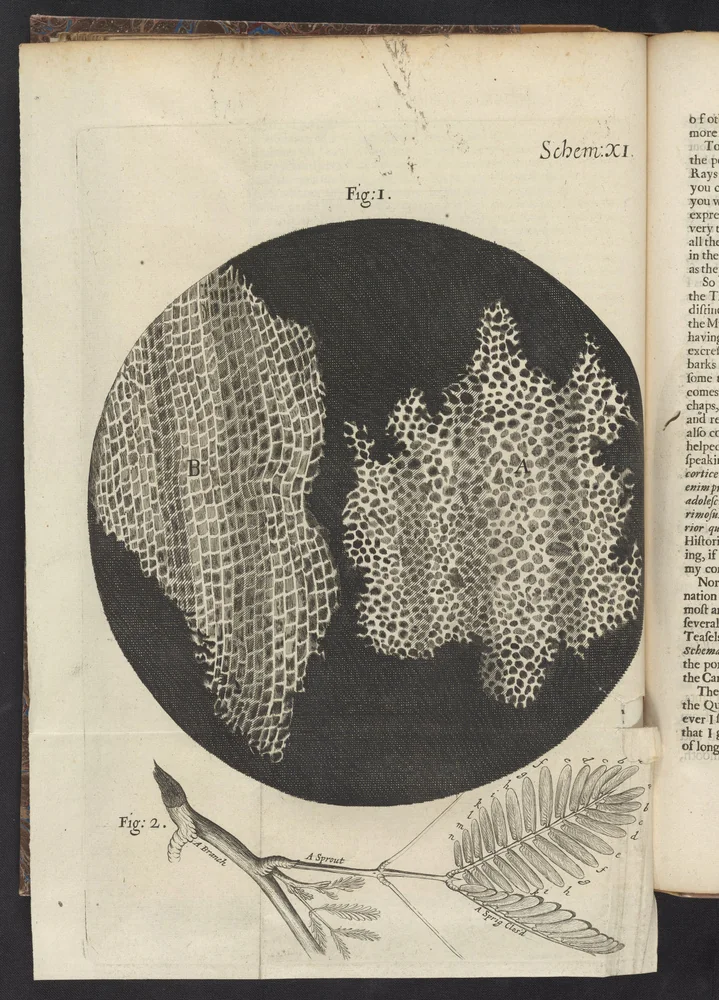
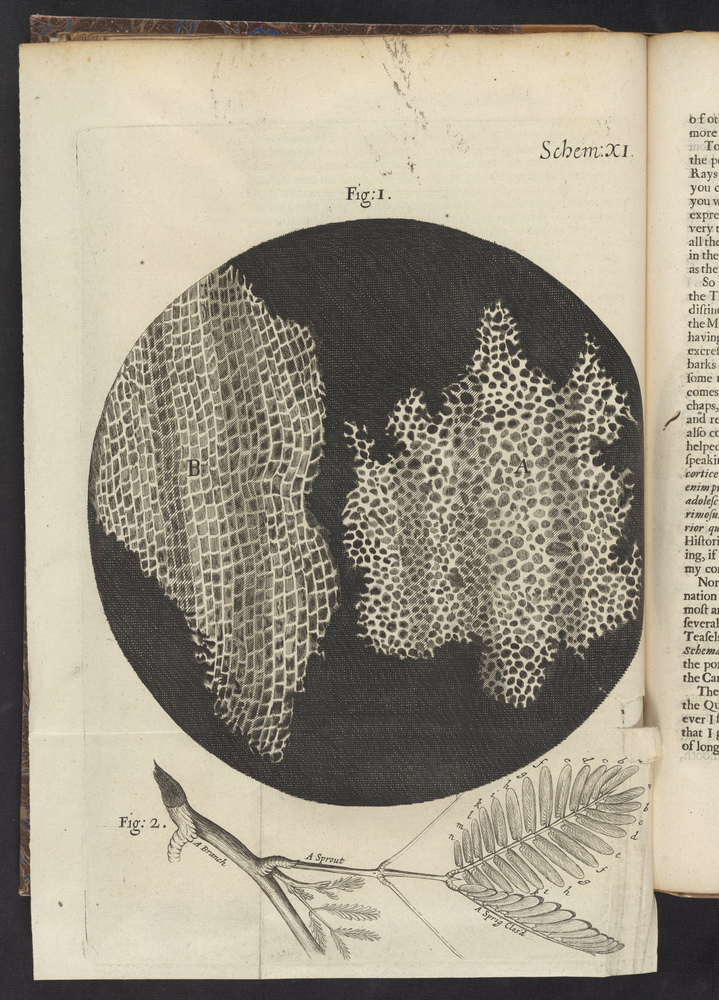
N06 · Microscopic view of cork and sprouts
 N06 ↗
Maker and date. Robert Hooke, author; J. Allestry and J. Martyn, printers · 1665
Object and leaf. SHI work fx719n66r; image bv73c139h. Micrographia, first edition, Schem. XI; cork in Fig. 1 A/B and sprouts in Fig. 2; Observation XVIII.
Context. The plate compares magnified cork structures and sprouts. The figures are physical observations; they do not encode a type of person.
Jung relation. BB visual-design analogy only. No documented Jung-specific meaning is claimed for this image; the reader supplies any character meaning.
Credit and reuse. Courtesy of Science History Institute. Public Domain Mark 1.0
Place and reason. Letter 2. It supplies small structural choices so adding a hero can alter the same character in a precise way, rather than adding a generic symbol beside it.
https://digital.sciencehistory.org/works/fx719n66r
https://digital.sciencehistory.org/downloads/deriv/bv73c139h/download_large
https://creativecommons.org/publicdomain/mark/1.0/
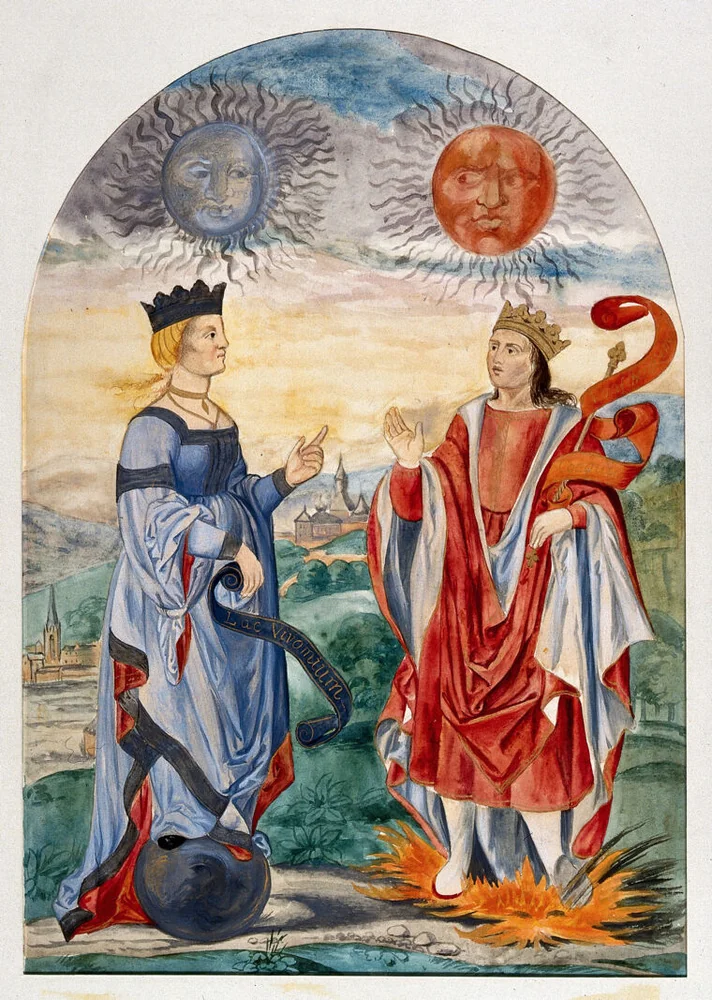
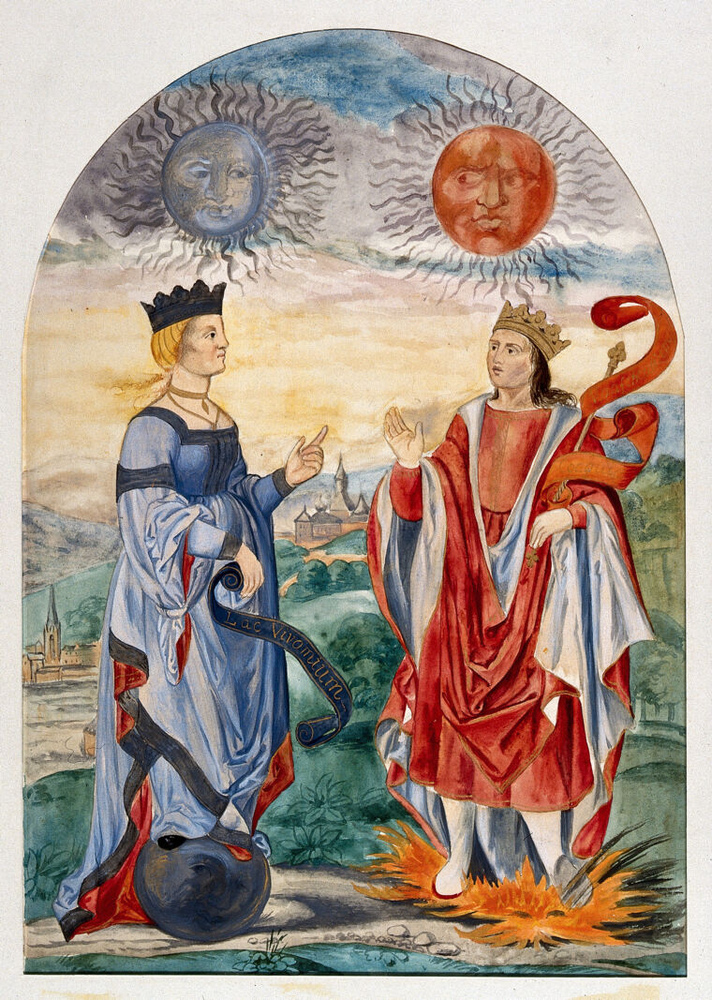
J04 · A moon above a queen dressed in blue, and a sun above a king dressed in red
 J04 ↗
Maker and date. Edith Annie Ibbs (1863–1937), after Splendor solis · 1900–1909; commissioned circa 1907
Object and leaf. Wellcome Collection 38703i
Context. Ibbs watercolour after Splendor solis, 1582, British Library Harley MS 3469. Catalogue identifies the alchemical principles as mercury and sulphur.
Jung relation. Alchemical paired-principle imagery. No evidence retrieved that Jung used this particular Ibbs watercolour.
Credit and reuse. Edith Annie Ibbs, A moon above a queen dressed in blue, and a sun above a king dressed in red, 1900–1909, after Splendor solis. Wellcome Collection 38703i. Public Domain Mark. https://wellcomecollection.org/works/fkh7h75r Public Domain Mark
Place and reason. Letter 2. The paired lights accompany the same Bookworm seen from another side. Letter 4. The paired figures accompany the reader comparing two heroes’ ways and choosing a direction.
https://wellcomecollection.org/works/fkh7h75r
https://iiif.wellcomecollection.org/image/V0025630/full/760,/0/default.jpg
https://creativecommons.org/publicdomain/mark/1.0/
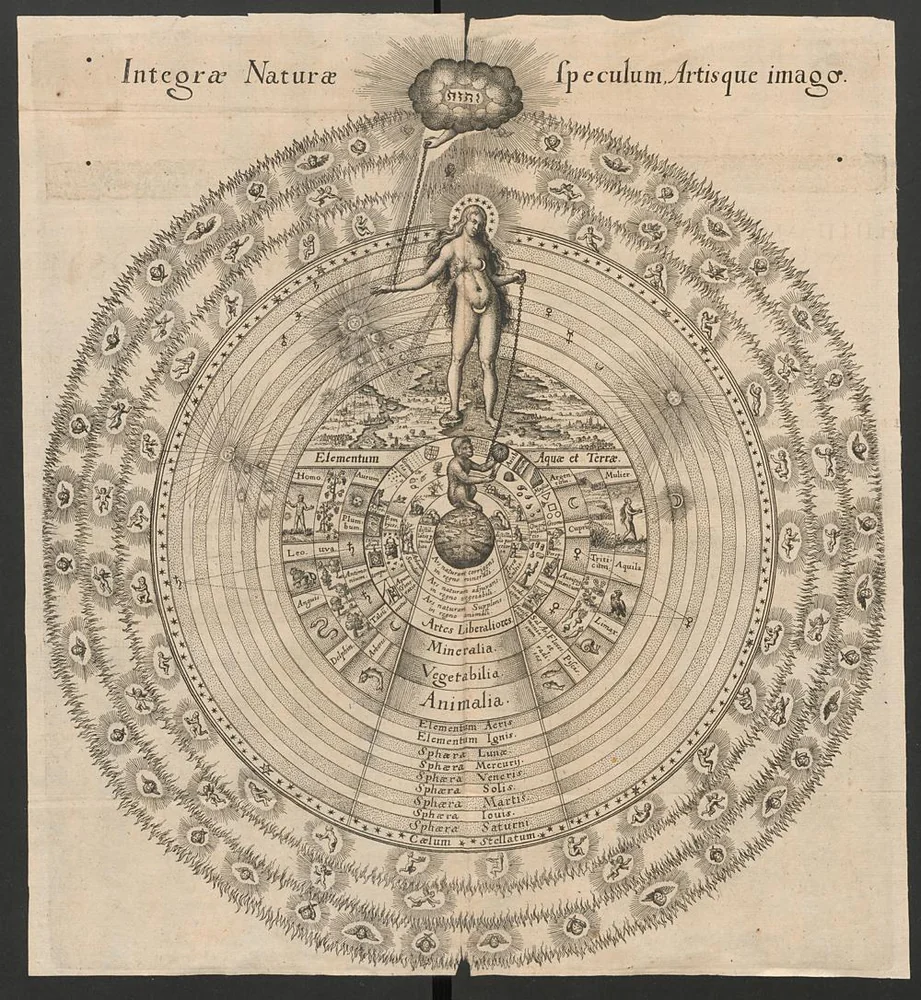
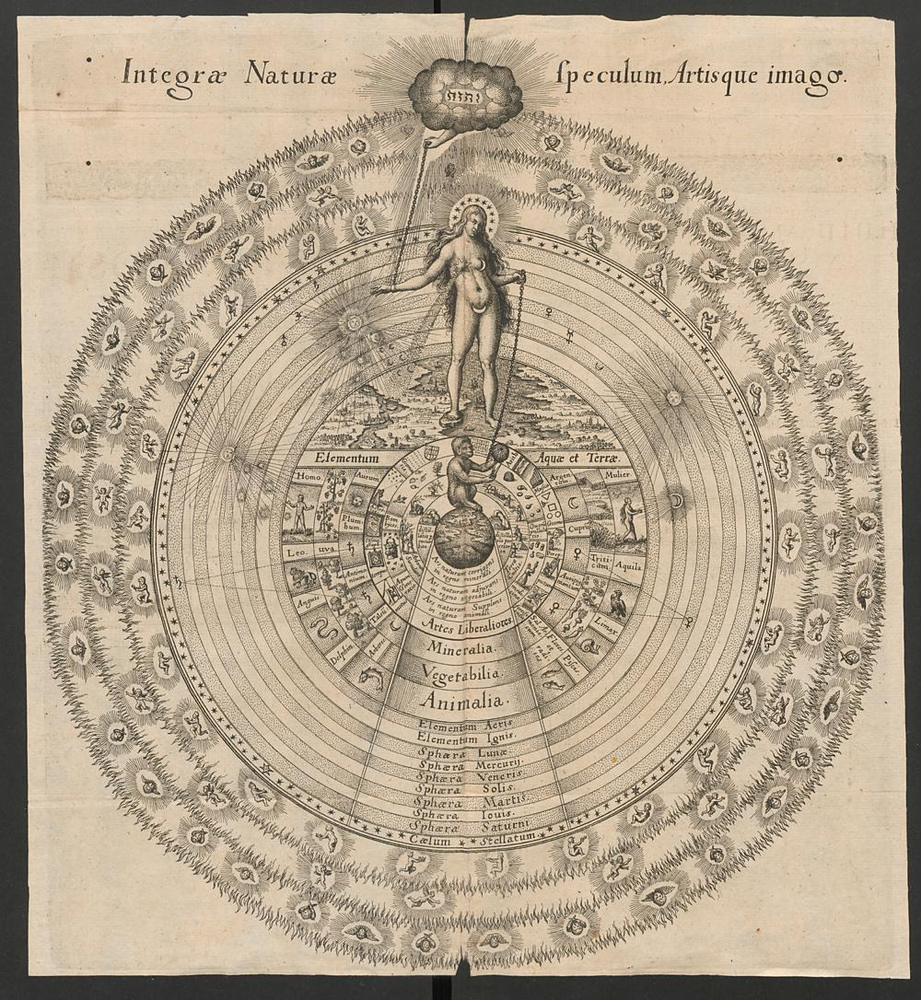
J02 · Integrae naturae speculum. Artisque imago
 J02 ↗
Maker and date. Robert Fludd, work author; engraver not identified in the retrieved institutional record · 1617, the edition actually acquired
Object and leaf. e-rara 1683877; plate range 1696046; selected image 1683893. Digital leaf [14], Integrae naturae speculum. Artisque imago, IIIF canvas 1683893
Context. The source image is from the Foundation's public-domain 1617 copy, not the Library of Congress exhibition thumbnail. LoC's exhibition cites a 1624 copy of this engraving. The different source edition is explicitly retained.
Jung relation. The Library of Congress exhibition states that Jung reproduced this Fludd engraving in the 1953 Psychology and Alchemy and identifies it as anima mundi, guide of mankind, herself guided by God.
Credit and reuse. Robert Fludd, Integrae naturae speculum. Artisque imago, in Utriusque cosmi, Openhemii: aere Iohan-Theodori de Bry, typis Hieronymi Galleri, 1617, digital leaf [14]. Stiftung der Werke von C.G. Jung, Zürich. https://doi.org/10.3931/e-rara-5500. Public Domain Mark. Public Domain Mark
Place and reason. Letter 3. The connected circles and chain accompany the meeting across the fold, where the reader chooses a greeting and distance.
https://www.e-rara.ch/cgj/content/titleinfo/1683877
https://www.e-rara.ch/download/webcache/1000/1683893
https://creativecommons.org/publicdomain/mark/1.0/
https://www.loc.gov/exhibits/red-book-of-carl-jung/the-red-book-and-beyond.html#obj2
https://doi.org/10.3931/e-rara-5500
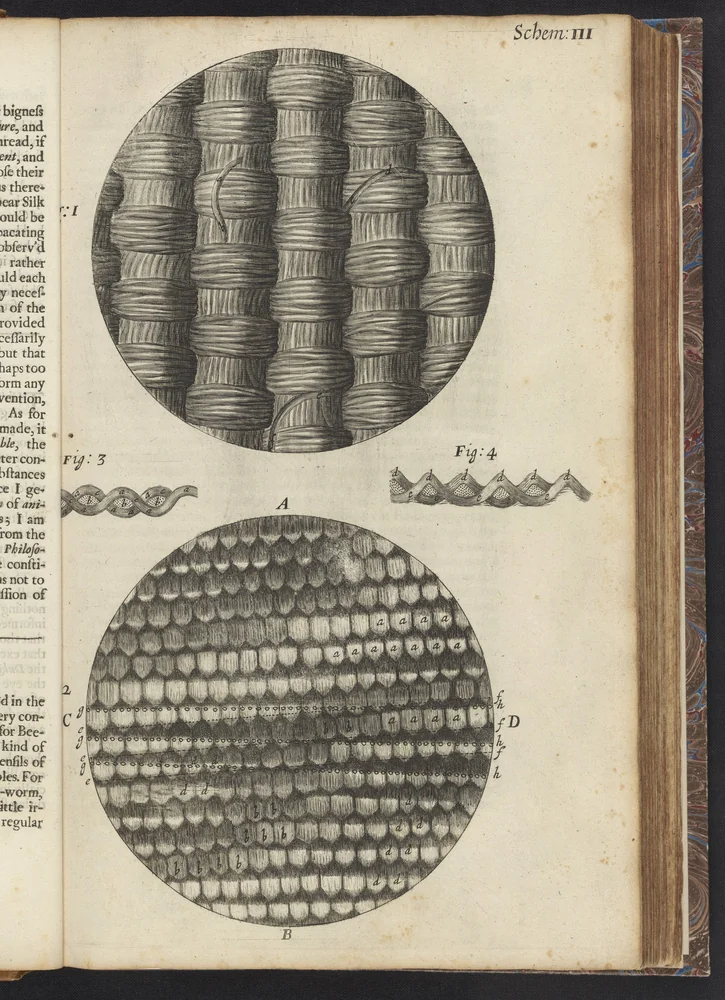
N08 · Microscopic view of taffeta and silk
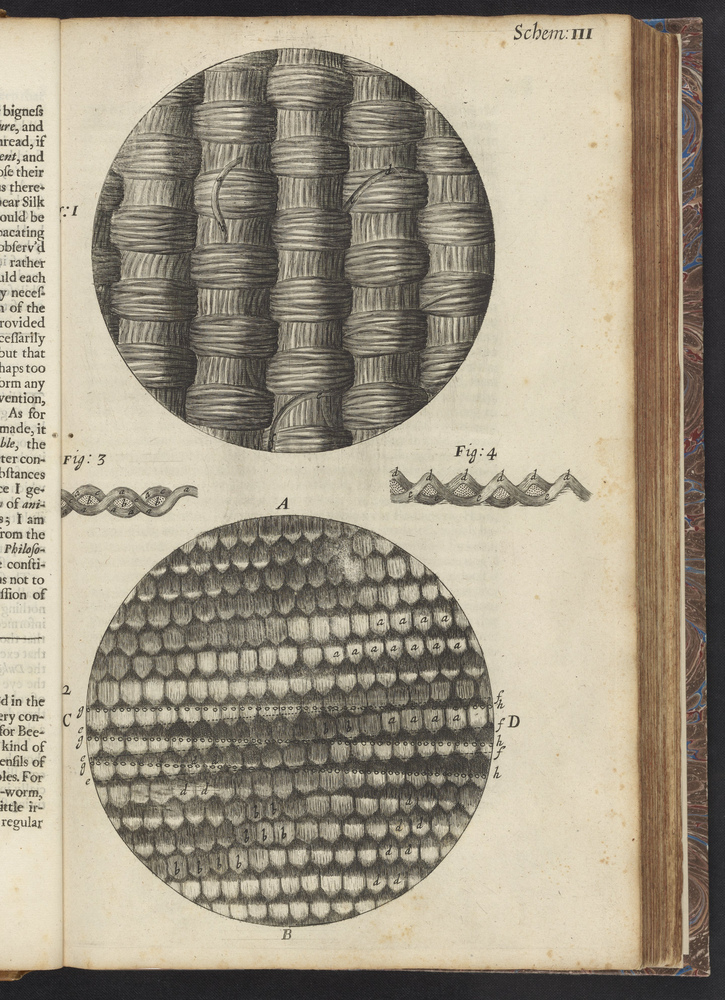 N08 ↗
Maker and date. Robert Hooke, author; J. Martyn and J. Allestry, printers · 1665
Object and leaf. SHI work nc580n69w; image 2r36tz43f. Micrographia, first edition, Schem. III; Fig. 1 fine waled silk/taffety, Fig. 2 watered silks/stuffs.
Context. Hooke’s plate compares magnified textile surfaces. The source labels taffeta and watered silk; it is a microscopy illustration rather than an archetype chart.
Jung relation. BB visual-design analogy only. No documented Jung-specific meaning is claimed for this image; the reader supplies any character meaning.
Credit and reuse. Courtesy of Science History Institute. Public Domain Mark 1.0
Place and reason. Letter 3. The visible weave turns presentation into a chosen, describable particular of the character without confusing a removable item with the whole person.
https://digital.sciencehistory.org/works/nc580n69w
https://digital.sciencehistory.org/downloads/deriv/2r36tz43f/download_large
https://creativecommons.org/publicdomain/mark/1.0/
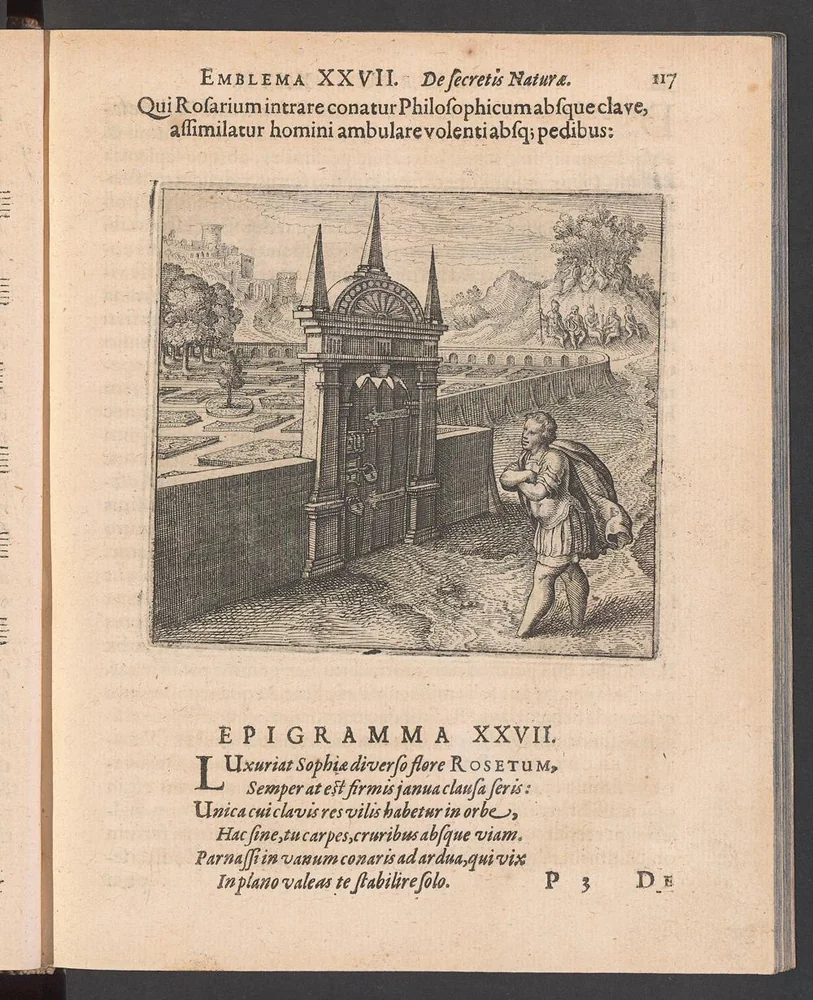
A26 · Atalanta fugiens, Emblema 27: A key at the philosophical garden
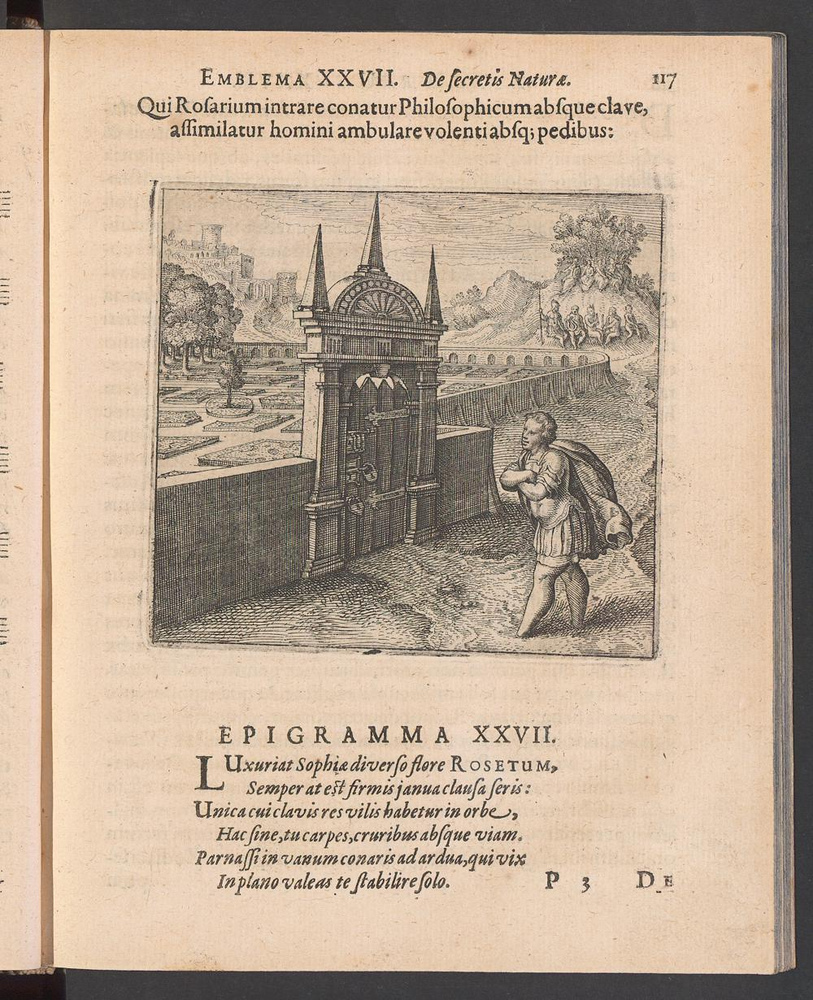 A26 ↗
Maker and date. Michael Maier (author); copperplate engraver not named in this e-rara record · 1617
Object and leaf. e-rara 1905969; leaf image 1906096; VD17 1:078836Y. Emblem 27; printed p. 117; IIIF canvas label 117; image ID 1906096
Context. The actual source is Emblema XXVII, printed p. 117. It depicts entry to a philosophical rose garden with a key. The Bookworm application is a proposed choice of approach and item-use; it does not establish a new obstacle in the accepted letter or restrict the Rainbow Spirit.
Jung relation. Documented provenance: digitized copy held by Stiftung der Werke von C. G. Jung, Zürich. This register makes no claim that Jung used this particular plate. The proposed classroom relation is interpretive, not documentary evidence of Jung’s usage.
Credit and reuse. Michael Maier, Atalanta fugiens (Oppenheim, 1617), emblem 27, p. 117. Stiftung der Werke von C. G. Jung, Zürich; e-rara, https://doi.org/10.3931/e-rara-7300. Public Domain Mark. Public Domain Mark 1.0
Place and reason. Letter 3. A key can be shown without turning it into the correct answer. Beside an encounter it asks the reader to author their character’s approach, rather than copy a heroic posture or accept a compulsory quest.
Displayed detail. Letter 3 uses a detail [0.43, 0.37, 0.38, 0.29] of the full image, measured from its top-left corner as fractions of width and height.
https://www.e-rara.ch/cgj/content/titleinfo/1905969
https://www.e-rara.ch/download/webcache/1000/1906096
https://creativecommons.org/publicdomain/mark/1.0/
https://doi.org/10.3931/e-rara-7300
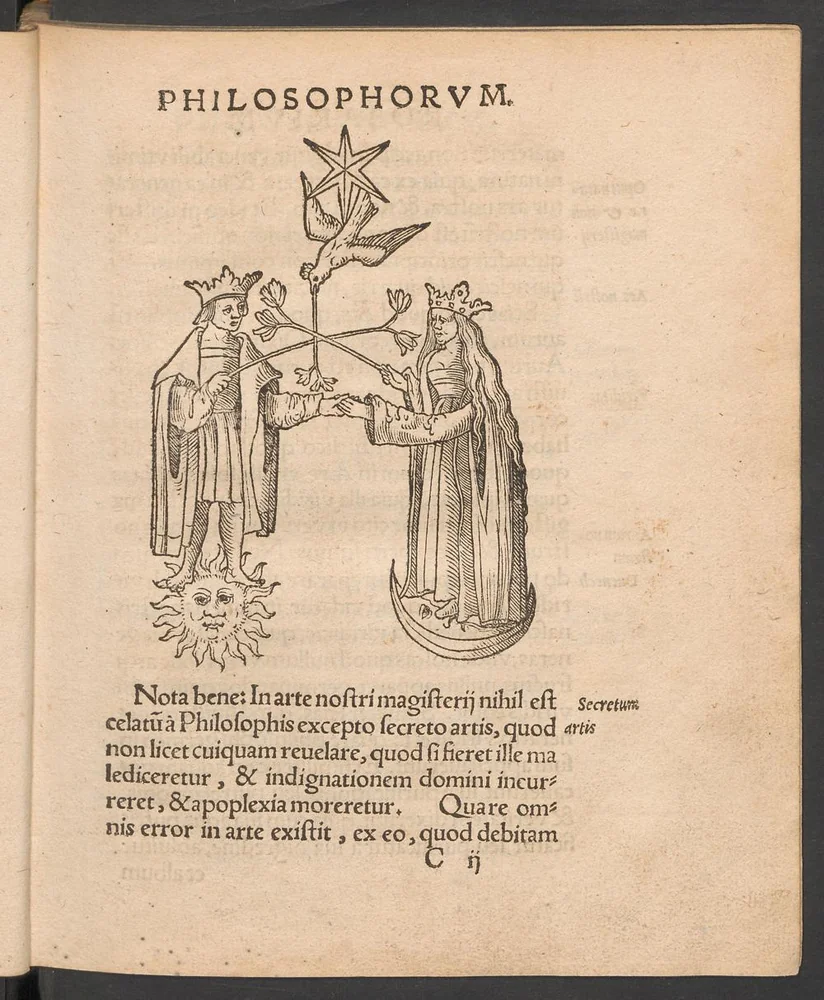
A28 · Rosarium philosophorum: clothed crowned pair with crossed flowering stems
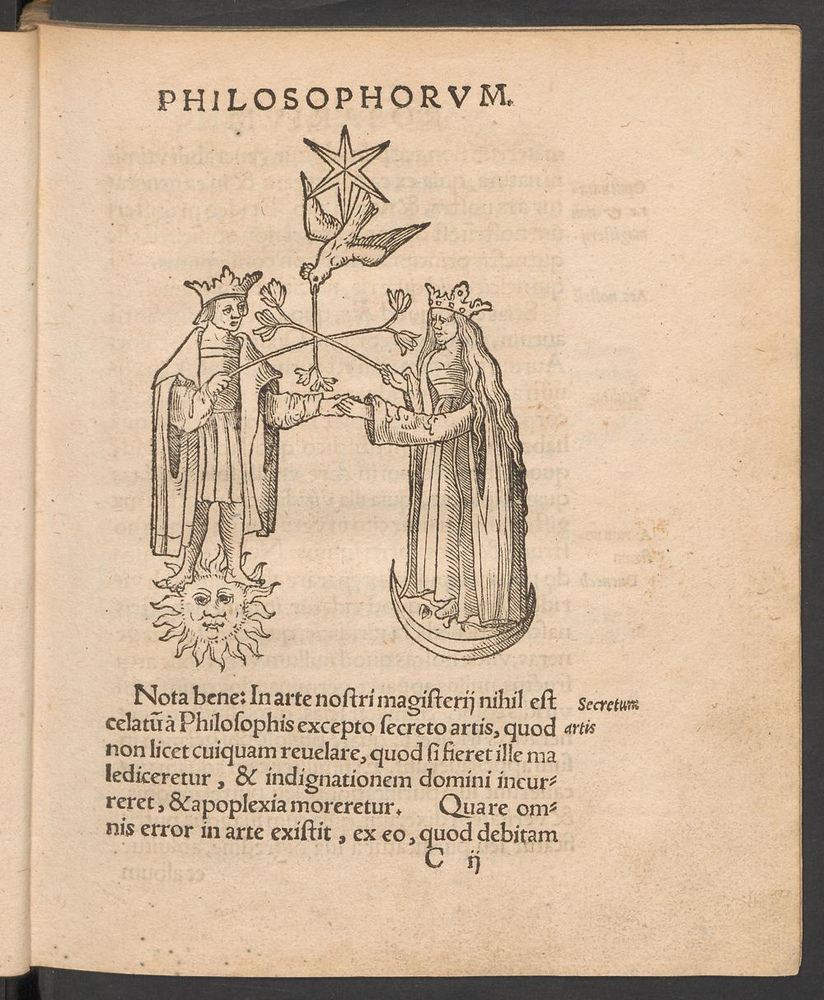 A28 ↗
Maker and date. Woodcut artist not named in the retrieved institutional record; work published by [Jacob] · [1550]
Object and leaf. e-rara 3179372; leaf image 3179397; VD16 A 1632. Unnumbered leaf; IIIF canvas label [23], image ID 3179397. The bracketed 23 is a digital sequence label, not a printed folio number.
Context. Two crowned, clothed figures stand on sun and crescent and touch hands below crossed flowering stems, a bird and a star. The alchemical pairing belongs to the historical book. The proposed encounter layout retains two distinct voices without assigning sex, temperament or status to the reader.
Jung relation. Documented provenance: Stiftung der Werke von C. G. Jung collection. Jung’s treatment of Rosarium as a work does not by itself prove use of this exact digital leaf; no plate-specific usage claim is made here. Bookworm placement is a proposed analogy.
Credit and reuse. Rosarium philosophorum ([Frankfurt a. M.]: [Jacob], [1550]), unnumbered leaf, e-rara image 3179397. Stiftung der Werke von C. G. Jung, Zürich; https://doi.org/10.3931/e-rara-10570. Public Domain Mark. Public Domain Mark 1.0
Place and reason. Letter 3. The joined hands give the encounter a visible relation while the two bodies remain distinct. Paired with A25, an offered item or action gains a material consequence; A26 lets the reader retain choice of proximity and response.
https://www.e-rara.ch/cgj/content/titleinfo/3179372
https://www.e-rara.ch/download/webcache/1000/3179397
https://creativecommons.org/publicdomain/mark/1.0/
https://doi.org/10.3931/e-rara-10570
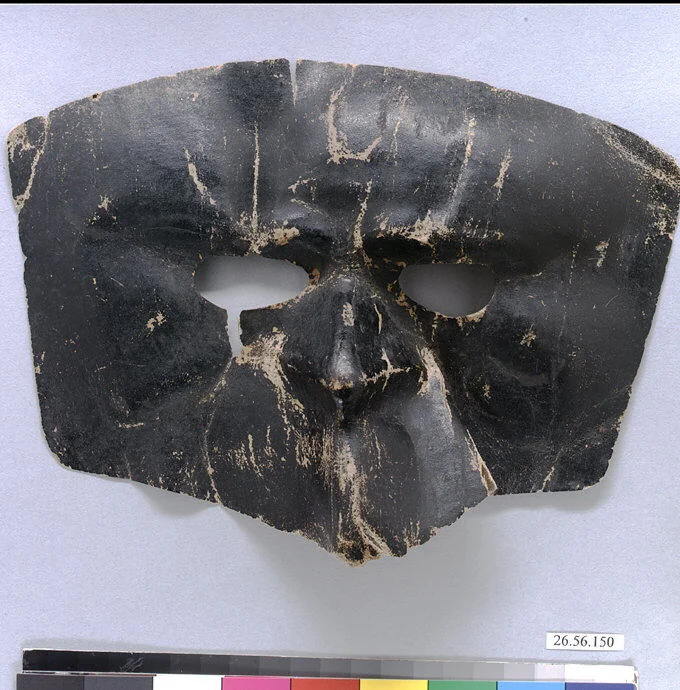
S02 · Mask
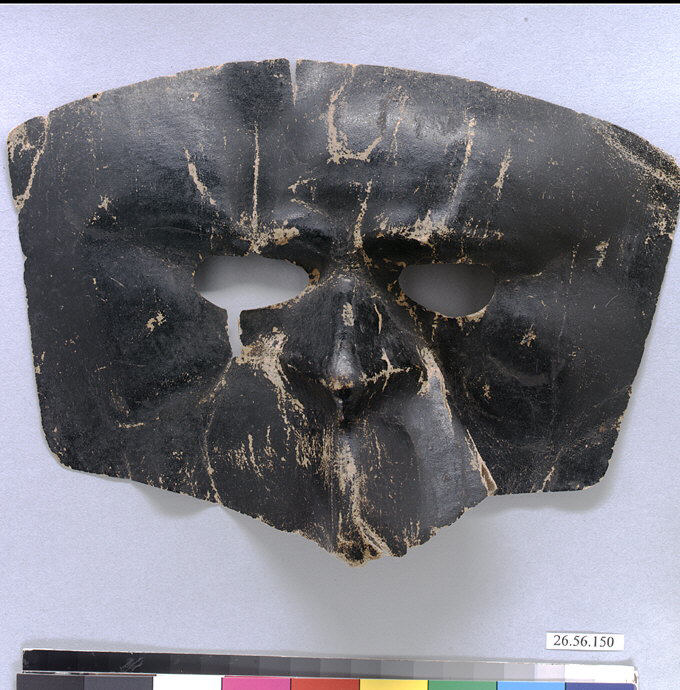 S02 ↗
Maker and date. Unidentified Venetian maker · ca. 1750
Object and leaf. 26.56.150. The Metropolitan Museum of Art, accession 26.56.150; digital object 221776
Context. The Met identifies this canvas mask as Italian, Venice, ca. 1750, accession 26.56.150. Its collection record supplies no psychological interpretation.
Jung relation. Proposed BB design analogy; no evidence retrieved that Jung used this exact object. Historical context and the reader’s authored fictional meaning remain distinct.
Credit and reuse. Mask. The Metropolitan Museum of Art, Rogers Fund, 1926, 26.56.150. Public domain. Public domain; The Met Open Access (CC0)
Place and reason. Letter 3. Letter 3 is the first explicit meeting with another reader. A wearable face has a concrete reason here: the character can decide how to appear in that encounter while carrying the same body from the earlier pages.
https://www.metmuseum.org/art/collection/search/221776
https://images.metmuseum.org/CRDImages/es/original/DP2880.jpg
https://creativecommons.org/publicdomain/zero/1.0/
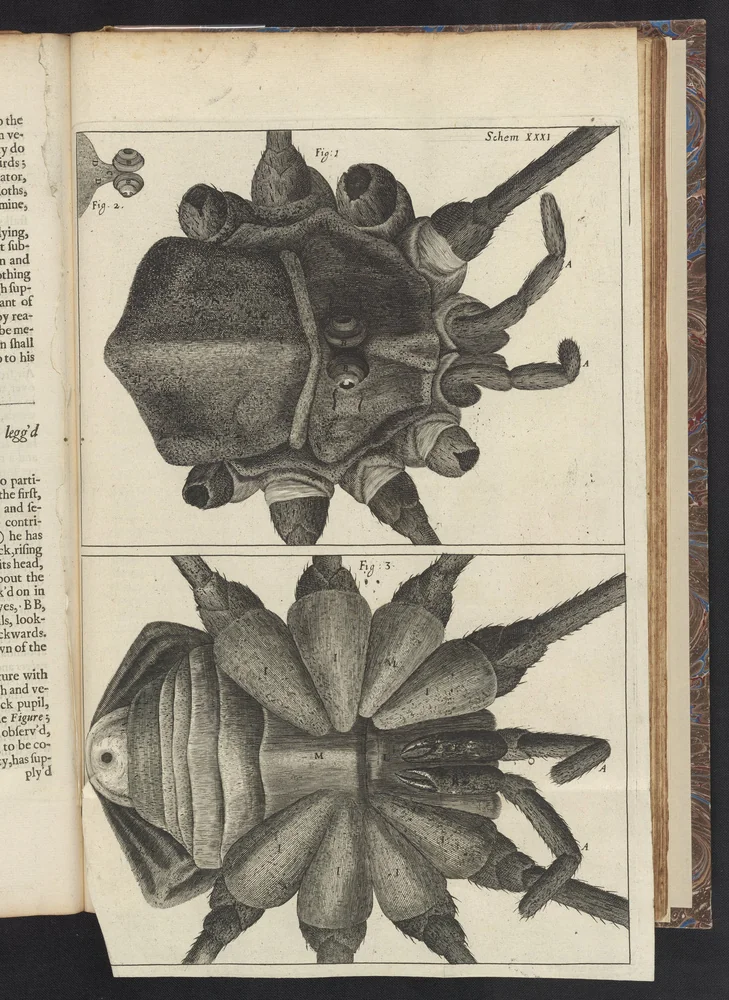
N03 · Microscopic view of a shepherd or long legg’d [long-legged] spider
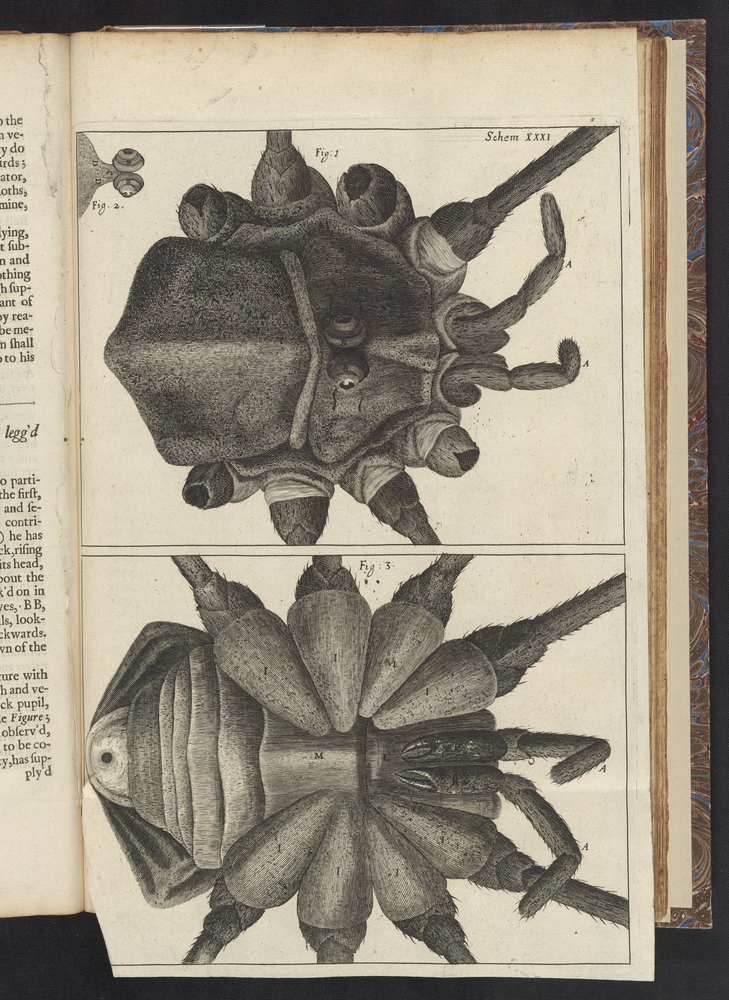 N03 ↗
Maker and date. Robert Hooke, author; J. Martyn and J. Allestry, printers · 1665
Object and leaf. SHI work zg64tn10d; image h128nf499. Micrographia, first edition, Schem. XXXI; Fig. 1 body, Fig. 2 eyes, Fig. 3 underbelly.
Context. The institutional record distinguishes views of the body, eyes and underside of the animal Hooke called a shepherd or long-legged spider. Its historical name is retained without imposing a modern species identification.
Jung relation. BB visual-design analogy only. No documented Jung-specific meaning is claimed for this image; the reader supplies any character meaning.
Credit and reuse. Courtesy of Science History Institute. Public Domain Mark 1.0
Place and reason. Letter 3. Several views make the greeting a concrete act of showing the existing character, rather than another isolated trait question.
https://digital.sciencehistory.org/works/zg64tn10d
https://digital.sciencehistory.org/downloads/deriv/h128nf499/download_large
https://creativecommons.org/publicdomain/mark/1.0/
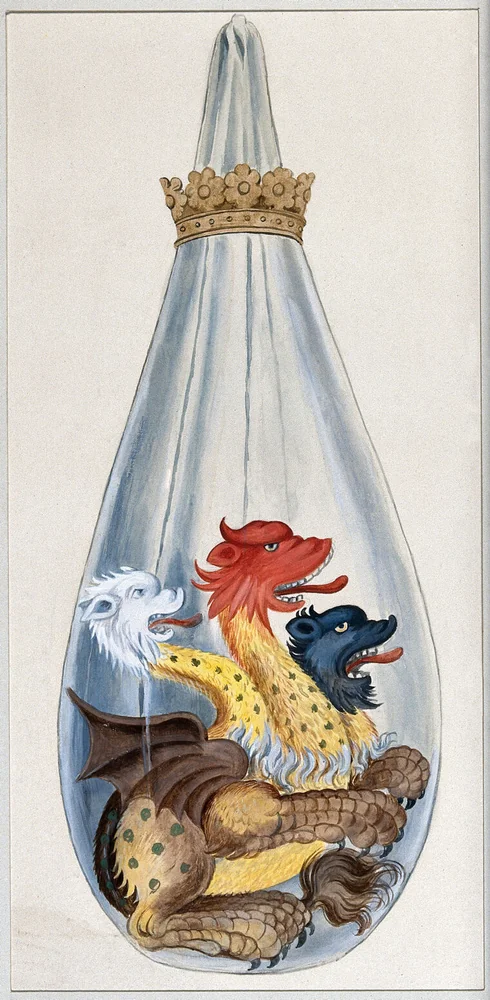
J08 · A three headed monster in an alchemical flask, representing the composition of the alchemical philosopher's stone
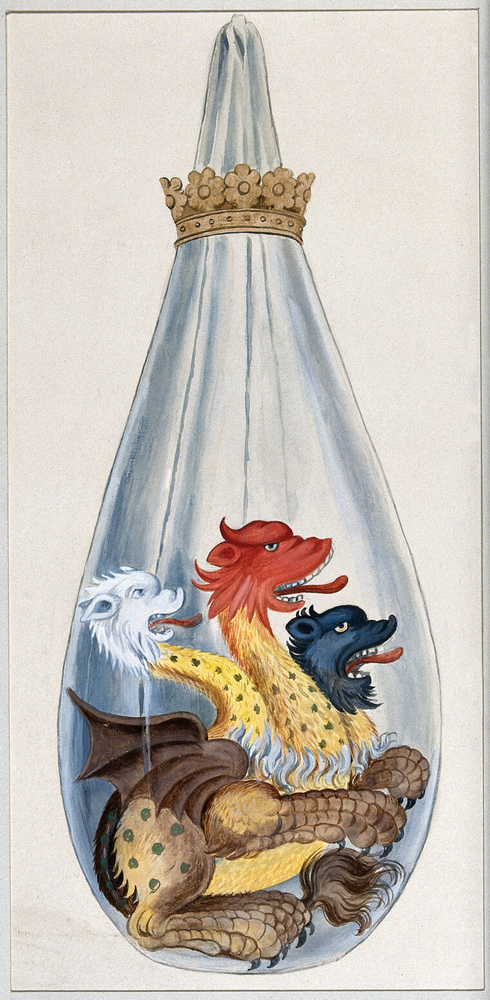 J08 ↗
Maker and date. Edith Annie Ibbs (1863–1937), after Splendor solis · 1900–1909; commissioned circa 1907
Object and leaf. Wellcome Collection 38824i
Context. Ibbs watercolour after Splendor solis, 1582, British Library Harley MS 3469. The catalogue describes salt, sulphur and mercury, and notes that Lennep identifies Cerberus while Hartlaub calls the creature a lion.
Jung relation. Alchemical composition imagery. No evidence retrieved that Jung used this particular Ibbs watercolour.
Credit and reuse. Edith Annie Ibbs, A three headed monster in an alchemical flask, 1900–1909, after Splendor solis. Wellcome Collection 38824i. Public Domain Mark. https://wellcomecollection.org/works/taf57z94 Public Domain Mark
Place and reason. Letter 3. Different heads in one creature accompany distinct hero-derived features acting together during a greeting.
https://wellcomecollection.org/works/taf57z94
https://iiif.wellcomecollection.org/image/V0025637/full/760,/0/default.jpg
https://creativecommons.org/publicdomain/mark/1.0/
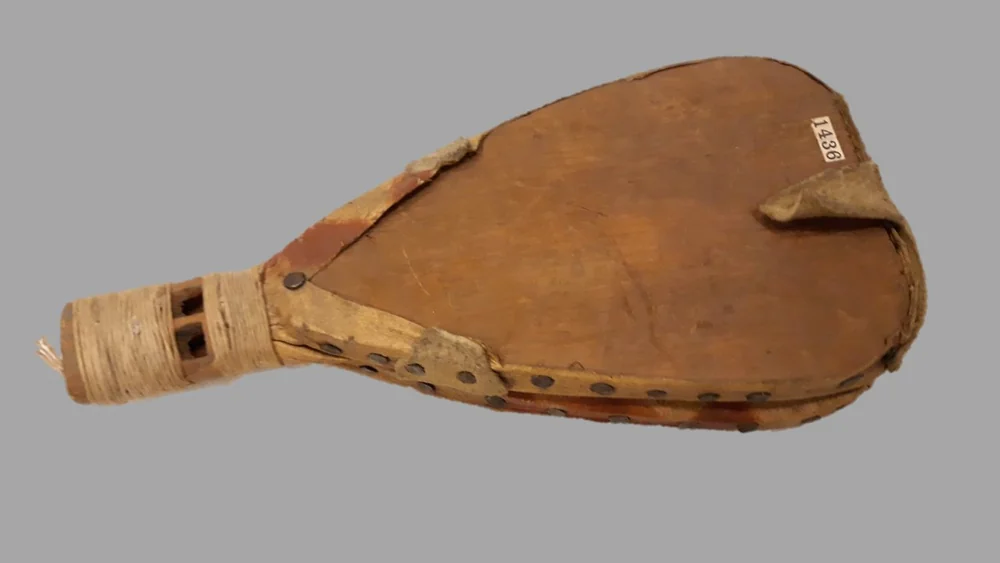
S04 · Stopped double pipe with bellows
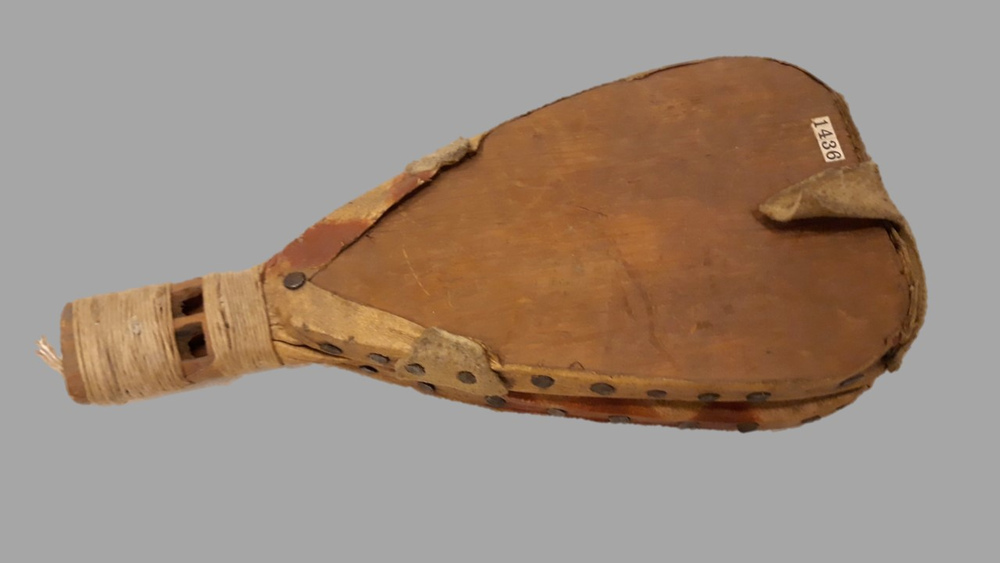 S04 ↗
Maker and date. Unidentified Xaadas (Haida) maker · 19th century
Object and leaf. 89.4.1436. The Metropolitan Museum of Art, accession 89.4.1436; digital object 502002
Context. The Met catalogues this as a 19th-century Xaadas (Haida) stopped double pipe with bellows from British Columbia, Canada, made of wood (red cedar or spruce), leather, metal and cord. It is accession 89.4.1436. The retrieved record does not document a performance or a particular ceremonial use.
Jung relation. Proposed BB design analogy; no evidence retrieved that Jung used this exact object. Historical context and the reader’s authored fictional meaning remain distinct.
Credit and reuse. Stopped double pipe with bellows. The Metropolitan Museum of Art, The Crosby Brown Collection of Musical Instruments, 1889, 89.4.1436. Public domain. Public domain; The Met Open Access (CC0)
Place and reason. Letter 3. This is the exact passage where the reader may communicate without extra prose. A sound-making object connects the visible body to a response the child can perform immediately.
https://www.metmuseum.org/art/collection/search/502002
https://images.metmuseum.org/CRDImages/mi/original/midp89.4.1436.jpg
https://creativecommons.org/publicdomain/zero/1.0/
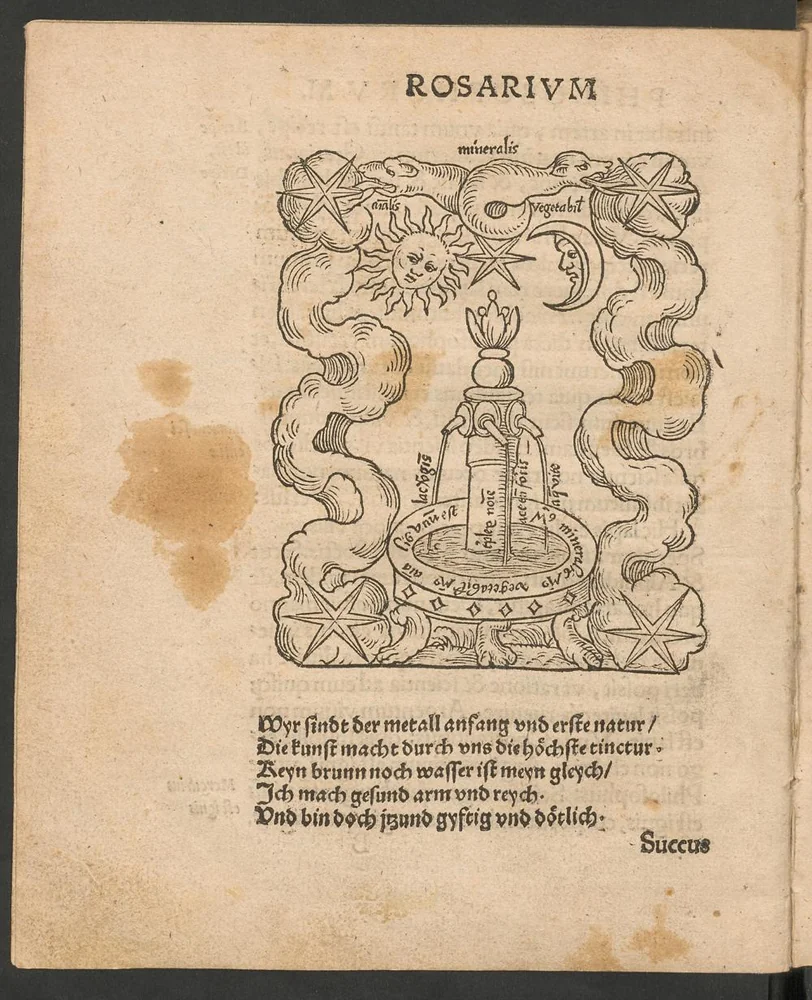
J01 · Rosarium philosophorum. Secunda pars alchimiae de lapide philosophico vero modo praeparando
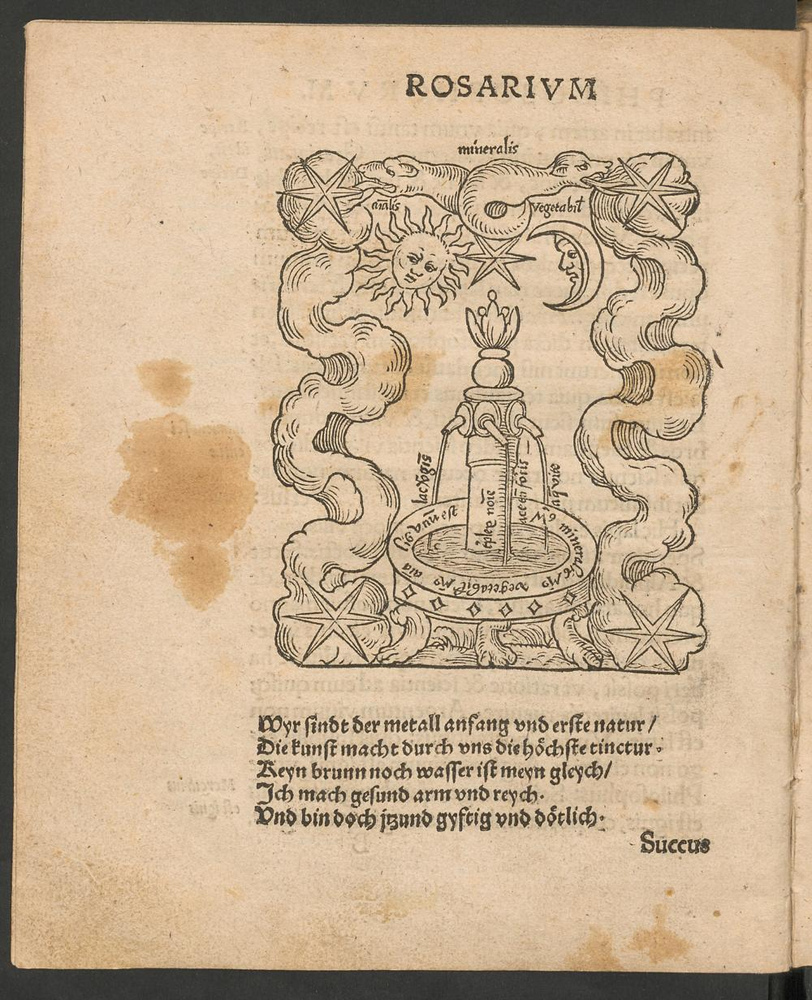 J01 ↗
Maker and date. Anonymous; imprint catalogued as [Frankfurt a. M.]: [Jacob], [1550] · [1550]
Object and leaf. e-rara 3179372; selected image 3179388. Digital leaf [14], unnumbered fountain woodcut, IIIF canvas 3179388
Context. Institutional digitization of the copy held by Stiftung der Werke von C.G. Jung, Zürich. Selected through the institution's IIIF manifest and downloaded directly from its declared image resource.
Jung relation. The digitized volume is held by the Foundation of the Works of C.G. Jung. This register does not claim that Jung used this exact scanned leaf for a particular psychological interpretation.
Credit and reuse. Rosarium philosophorum, [Frankfurt a. M.]: [Jacob], [1550], digital leaf [14]. Stiftung der Werke von C.G. Jung, Zürich. https://doi.org/10.3931/e-rara-10570. Public Domain Mark. Public Domain Mark
Place and reason. Letter 4. The shared fountain meets the recollection of a move and the visible result of another attempt on paper.
https://www.e-rara.ch/cgj/content/titleinfo/3179372
https://www.e-rara.ch/download/webcache/1000/3179388
https://creativecommons.org/publicdomain/mark/1.0/
https://doi.org/10.3931/e-rara-10570
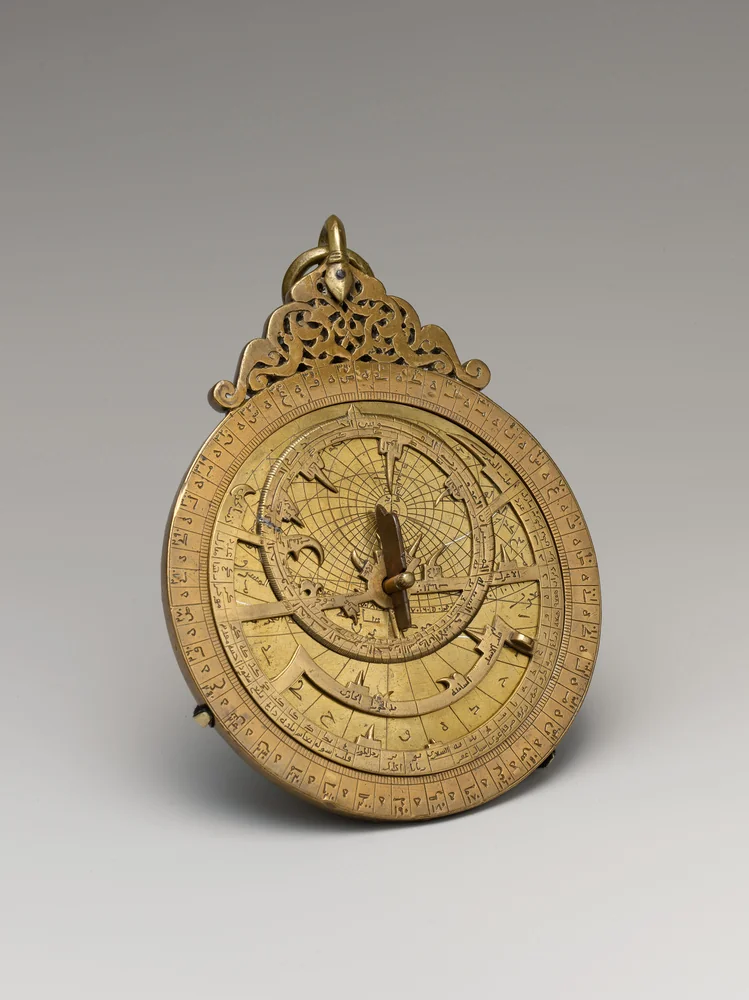
S03 · Astrolabe of ‘Umar ibn Yusuf ibn ‘Umar ibn ‘Ali ibn Rasul al-Muzaffari
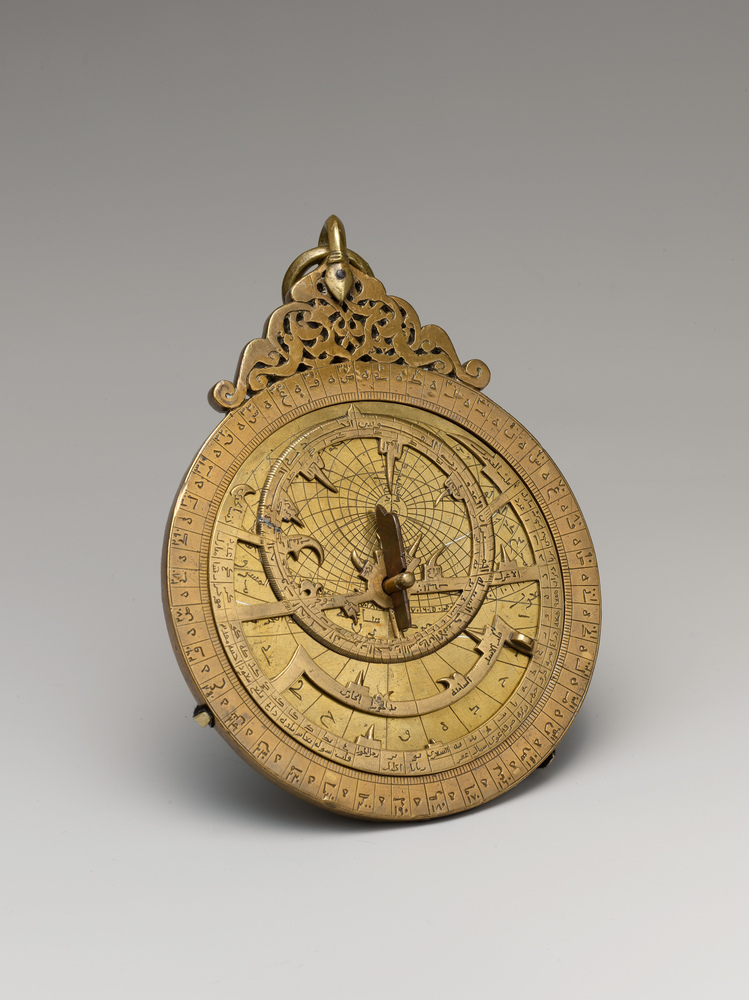 S03 ↗
Maker and date. ‘Umar ibn Yusuf ibn ‘Umar ibn ‘Ali ibn Rasul al-Muzaffari · dated 690 AH/1291 CE
Object and leaf. 91.1.535a–h. The Metropolitan Museum of Art, accession 91.1.535a–h; digital object 444408
Context. The Met dates this brass astrolabe to 690 AH/1291 CE and attributes it through its inscription to the Rasulid prince ‘Umar ibn Yusuf. The primary record places manufacture in Yemen and describes cast, hammered, pierced, chased brass inlaid with silver.
Jung relation. Proposed BB design analogy; no evidence retrieved that Jung used this exact object. Historical context and the reader’s authored fictional meaning remain distinct.
Credit and reuse. Astrolabe of ‘Umar ibn Yusuf ibn ‘Umar ibn ‘Ali ibn Rasul al-Muzaffari. The Metropolitan Museum of Art, Edward C. Moore Collection, Bequest of Edward C. Moore, 1891, 91.1.535a–h. Public domain. Public domain; The Met Open Access (CC0)
Place and reason. Letter 4. The letter asks the reader to choose and try a direction. The instrument’s visible centre and orientations give that choice a place in the collage while the action remains the reader’s own.
https://www.metmuseum.org/art/collection/search/444408
https://images.metmuseum.org/CRDImages/is/original/DP170386.jpg
https://creativecommons.org/publicdomain/zero/1.0/
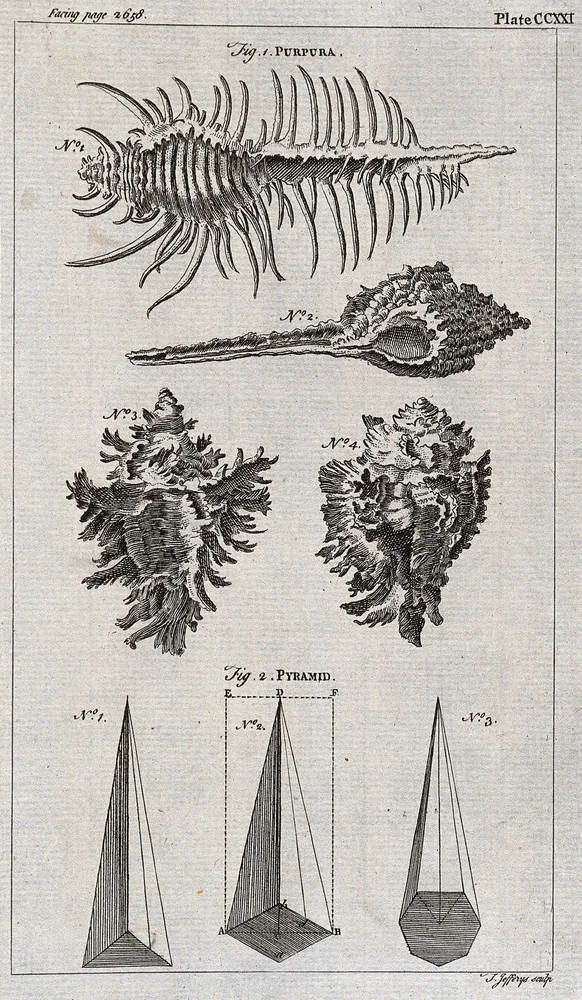
N05 · Above, the shell of a purpura; below, three sea shells and three diagrams of pyramids. Etching by T. Jefferys.
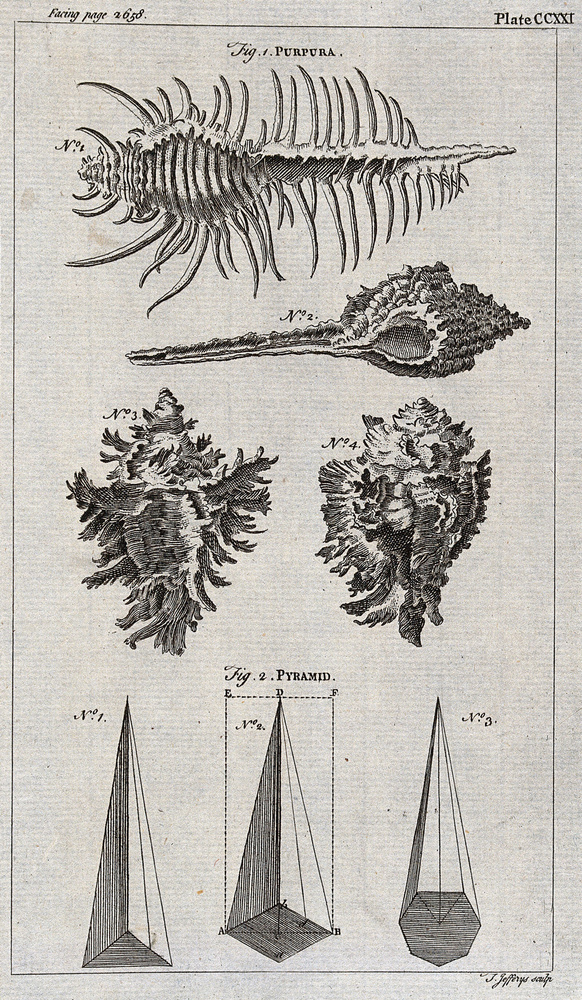 N05 ↗
Maker and date. Thomas Jefferys, engraver · Undated in the retrieved institutional record
Object and leaf. Wellcome Collection 41850i; image V0021994; work mcz6ebt8. Plate CCXXI: Fig. 1 Purpura and shell examples; Fig. 2 Pyramid diagrams.
Context. A comparative engraved plate places shells above pyramid diagrams. Wellcome identifies the upper shell as a purpura and transcribes the plate number and figure labels; the record supplies no production date.
Jung relation. BB visual-design analogy only. No documented Jung-specific meaning is claimed for this image; the reader supplies any character meaning.
Credit and reuse. Wellcome Collection, 41850i / V0021994. Public Domain Mark
Place and reason. Letter 4. Rigid, curved and pointed forms offer concrete alternatives to the existing pupa and wing when the child tests a decision through movement.
https://wellcomecollection.org/works/mcz6ebt8
https://iiif.wellcomecollection.org/image/V0021994/full/1600,/0/default.jpg
https://creativecommons.org/publicdomain/mark/1.0/
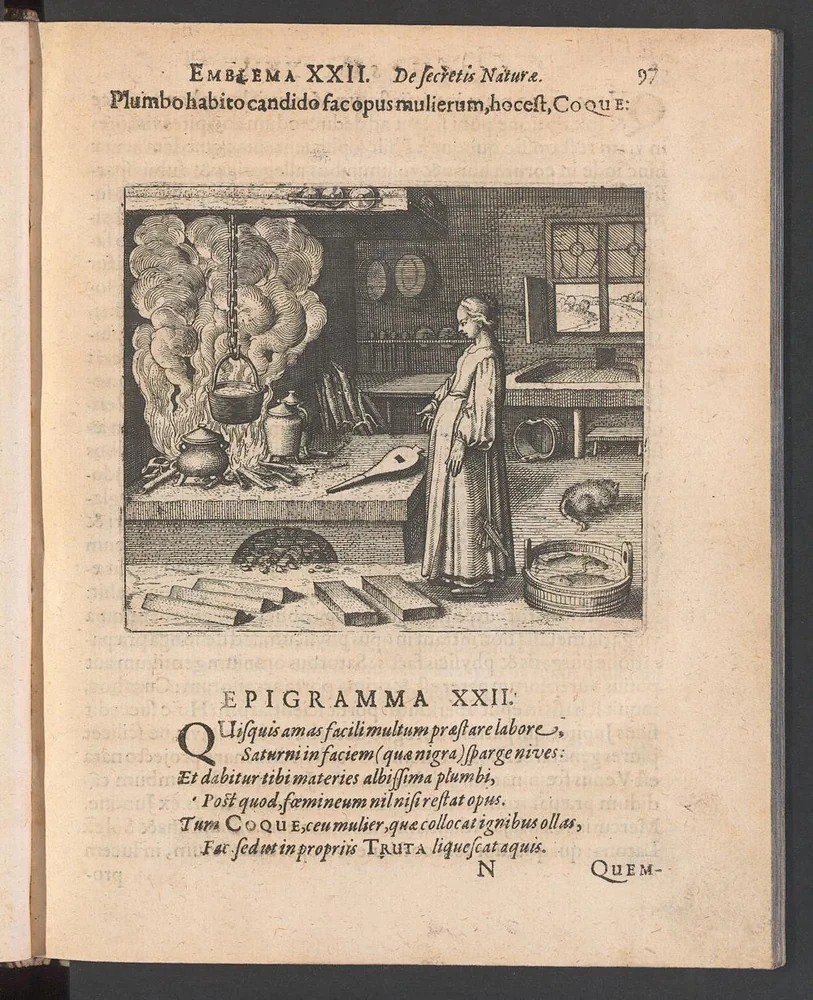
A25 · Atalanta fugiens, Emblema 22: Cooking at the hearth
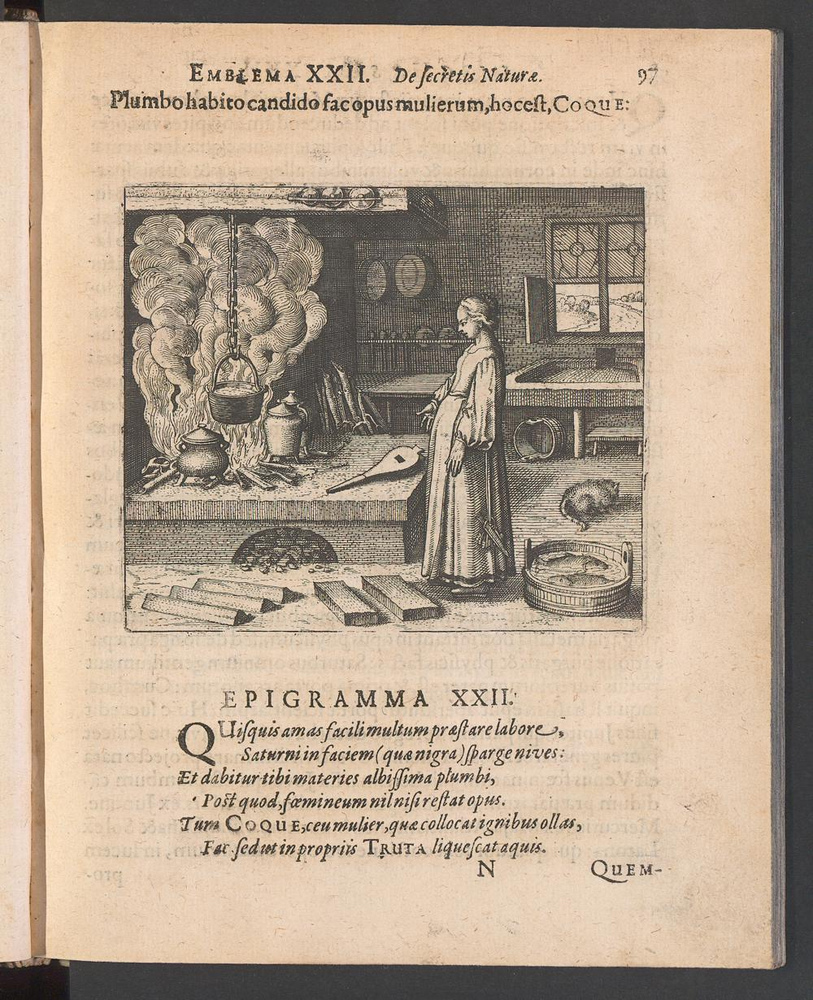 A25 ↗
Maker and date. Michael Maier (author); copperplate engraver not named in this e-rara record · 1617
Object and leaf. e-rara 1905969; leaf image 1906076; VD17 1:078836Y. Emblem 22; printed p. 97; IIIF canvas label 97; image ID 1906076
Context. Emblema XXII, printed p. 97, presents alchemical work through a cook working at a fire. The plate supplies a historical image of coordinated tools and materials. A fictional Bookworm item and its paper trace are proposed by the reader, not identified as the image’s original meaning.
Jung relation. Documented provenance: digitized copy held by Stiftung der Werke von C. G. Jung, Zürich. This register makes no claim that Jung used this particular plate. The proposed classroom relation is interpretive, not documentary evidence of Jung’s usage.
Credit and reuse. Michael Maier, Atalanta fugiens (Oppenheim, 1617), emblem 22, p. 97. Stiftung der Werke von C. G. Jung, Zürich; e-rara, https://doi.org/10.3931/e-rara-7300. Public Domain Mark. Public Domain Mark 1.0
Place and reason. Letter 4. The hearth shows an action leaving a result through the cooperation of several particulars. It lets the reader specify what their character can do and leave behind while tying the result back to earlier hero reasons.
Displayed detail. Letter 4 uses a detail [0.13, 0.25, 0.72, 0.43] of the full image, measured from its top-left corner as fractions of width and height.
https://www.e-rara.ch/cgj/content/titleinfo/1905969
https://www.e-rara.ch/download/webcache/1000/1906076
https://creativecommons.org/publicdomain/mark/1.0/
https://doi.org/10.3931/e-rara-7300
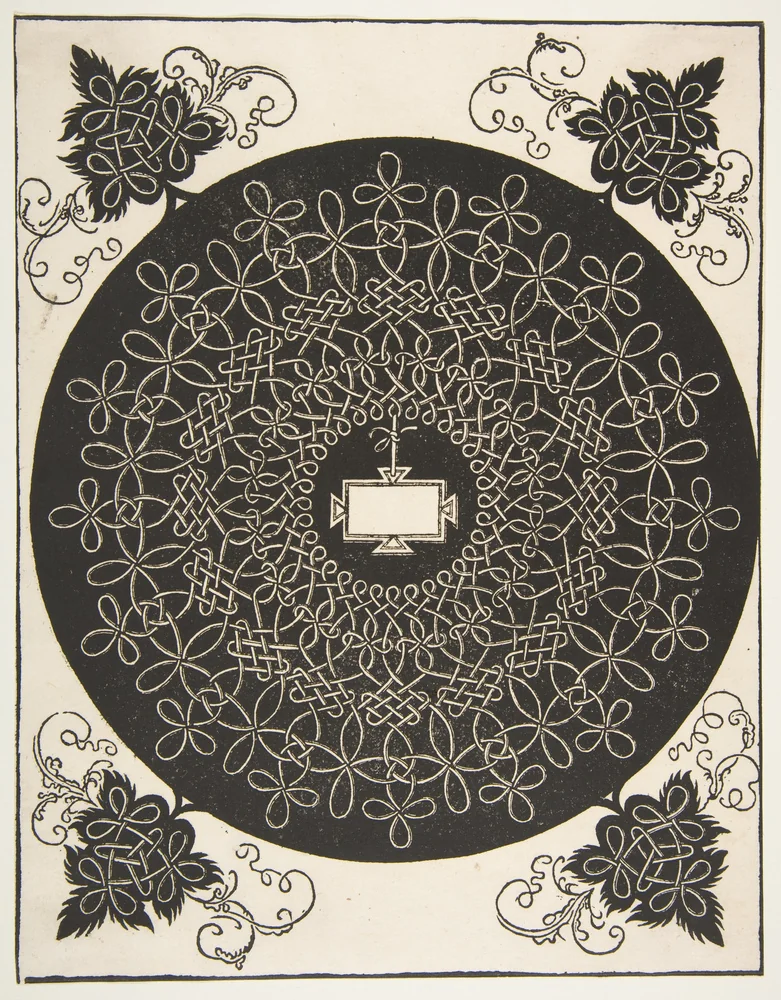
S06 · “The First Knot”. Interlaced Roundel with an Oblong Panel in its Center
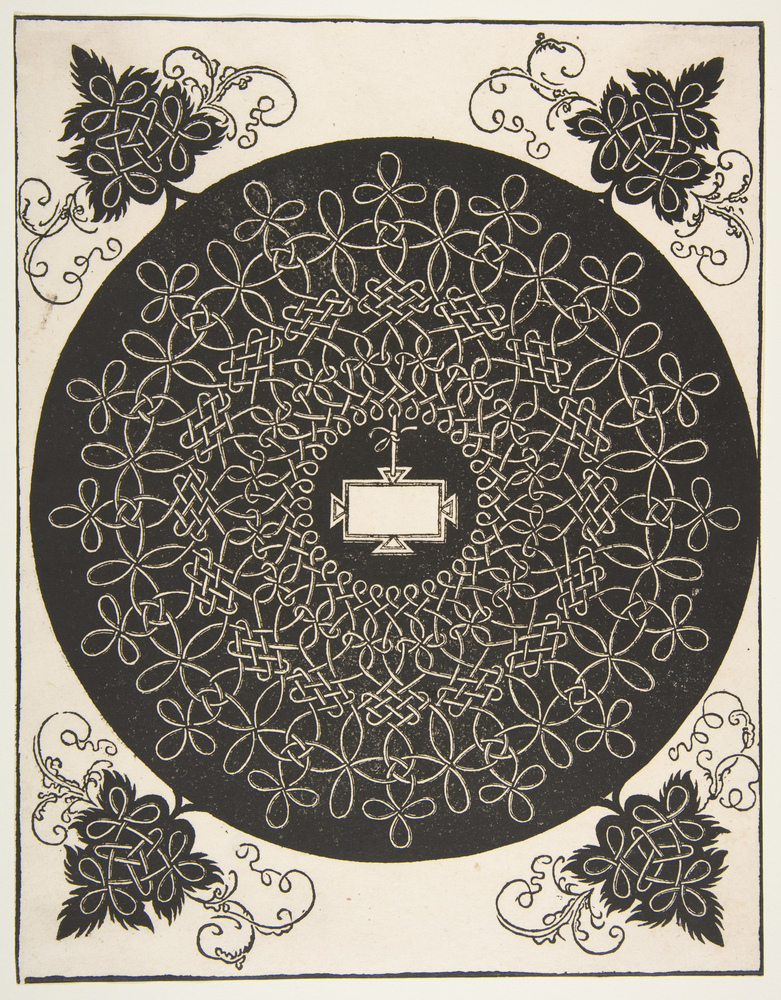 S06 ↗
Maker and date. Albrecht Dürer, after Leonardo da Vinci (or workshop) · 1521 before
Object and leaf. 1984.1201.31. The Metropolitan Museum of Art, accession 1984.1201.31; digital object 388788
Context. The Met identifies this woodcut as an embroidery pattern, dated before 1521 (catalogue wording: “1521 before”). White interlaced forms on a dark ground surround a blank oblong panel. This is a different object from the earlier reserve’s Melencolia I.
Jung relation. Proposed BB design analogy; no evidence retrieved that Jung used this exact object. Historical context and the reader’s authored fictional meaning remain distinct.
Credit and reuse. “The First Knot”. Interlaced Roundel with an Oblong Panel in its Center. The Metropolitan Museum of Art, George Khuner Collection, Bequest of Marianne Khuner, 1984, 1984.1201.31. Public domain. Public domain; The Met Open Access (CC0)
Place and reason. Letter 4. The reader has just considered different possible choices. Interlace gives the coexistence of influences a visible form beside the same continuing body, rather than sorting the character into a fixed type.
https://www.metmuseum.org/art/collection/search/388788
https://images.metmuseum.org/CRDImages/dp/original/DP816477.jpg
https://creativecommons.org/publicdomain/zero/1.0/
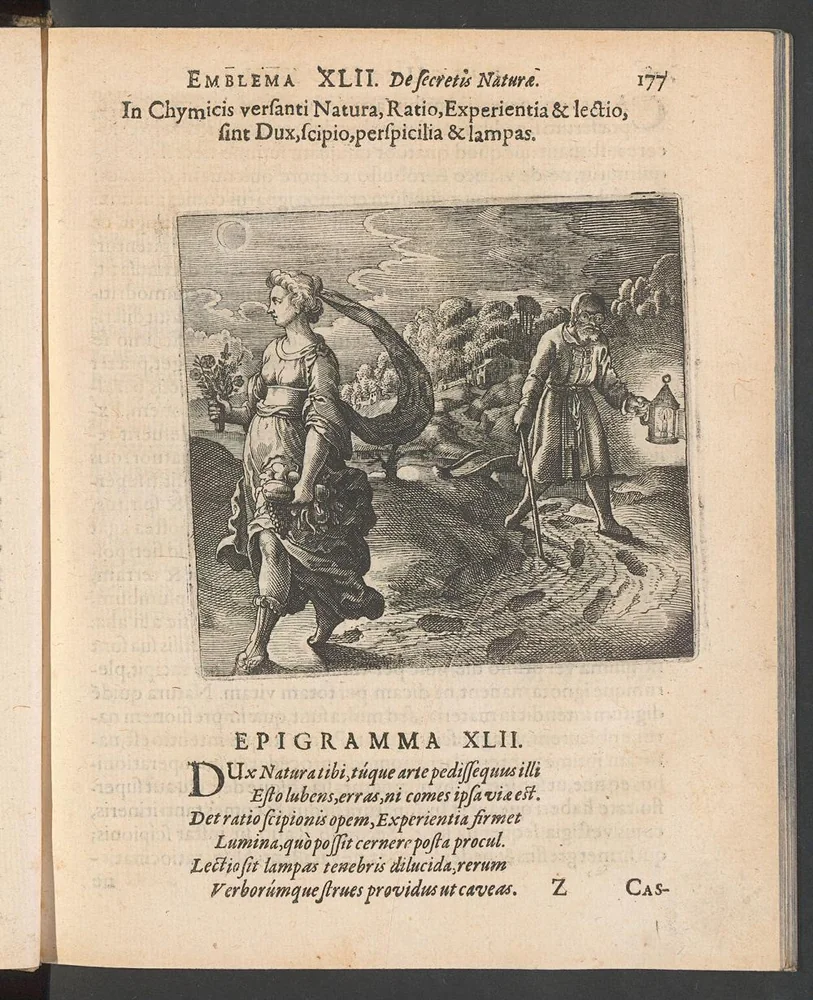
A27 · Atalanta fugiens, Emblema 42: Nature, reason, experience and reading
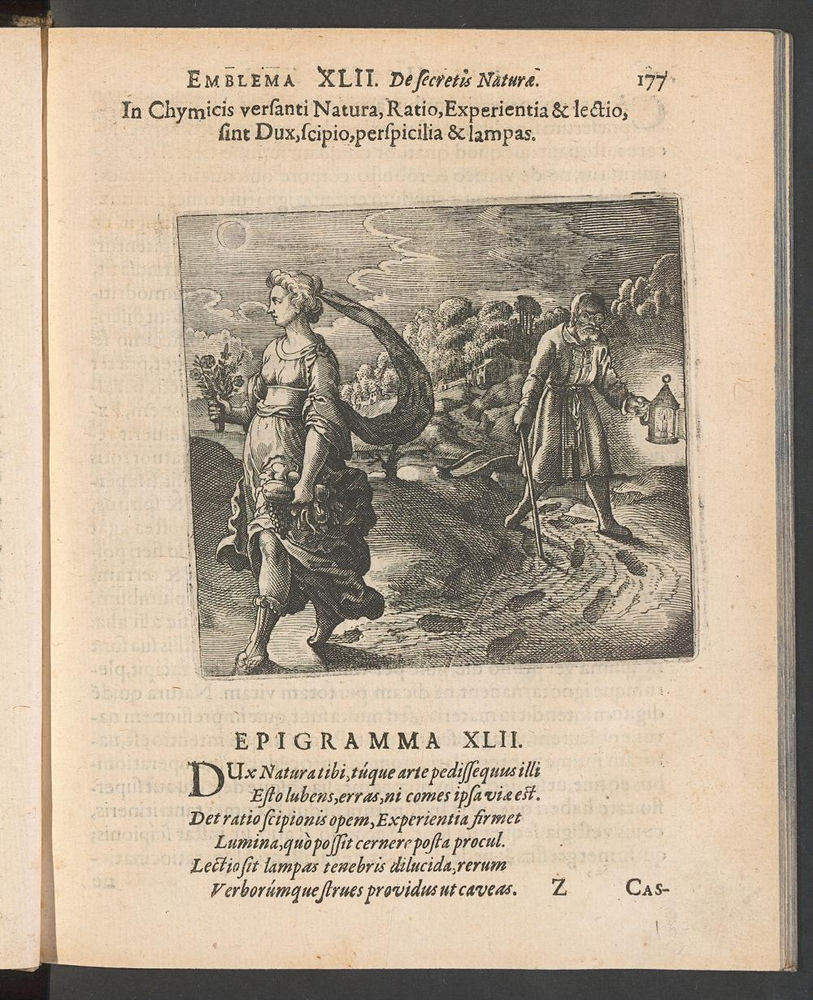 A27 ↗
Maker and date. Michael Maier (author); copperplate engraver not named in this e-rara record · 1617
Object and leaf. e-rara 1905969; leaf image 1906156; VD17 1:078836Y. Emblem 42; printed p. 177; IIIF canvas label 177; image ID 1906156
Context. Emblema XLII, printed p. 177, names Nature, Ratio, Experientia and lectio, alongside guide, staff, spectacles and lamp. The plate explicitly coordinates several kinds of guidance. Choosing how a fictional character uses help is our design relation.
Jung relation. Documented provenance: digitized copy held by Stiftung der Werke von C. G. Jung, Zürich. This register makes no claim that Jung used this particular plate. The proposed classroom relation is interpretive, not documentary evidence of Jung’s usage.
Credit and reuse. Michael Maier, Atalanta fugiens (Oppenheim, 1617), emblem 42, p. 177. Stiftung der Werke von C. G. Jung, Zürich; e-rara, https://doi.org/10.3931/e-rara-7300. Public Domain Mark. Public Domain Mark 1.0
Place and reason. Letter 4. Several forms of guidance can contribute without erasing the traveller’s action. The image connects hero synthesis with the reader’s decision at the exact place the letter asks what the heroes would say.
Displayed detail. Letter 4 uses a detail [0.12, 0.25, 0.74, 0.43] of the full image, measured from its top-left corner as fractions of width and height.
https://www.e-rara.ch/cgj/content/titleinfo/1905969
https://www.e-rara.ch/download/webcache/1000/1906156
https://creativecommons.org/publicdomain/mark/1.0/
https://doi.org/10.3931/e-rara-7300
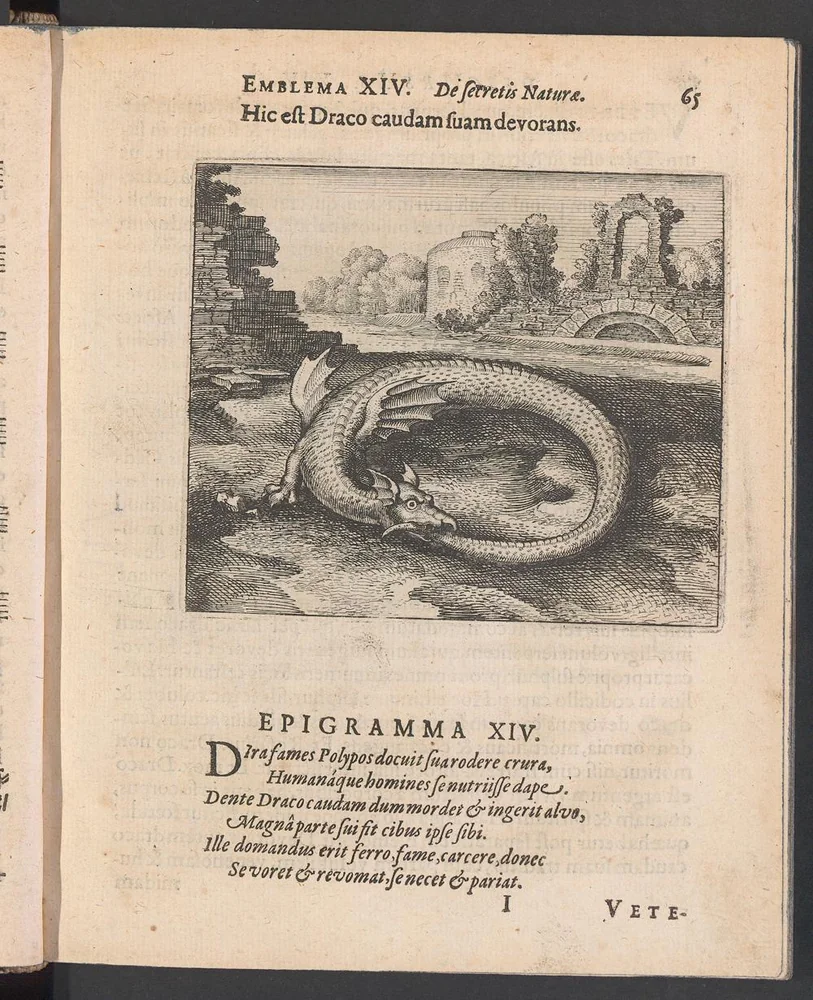
A23 · Atalanta fugiens, Emblema 14: Dragon devouring its own tail
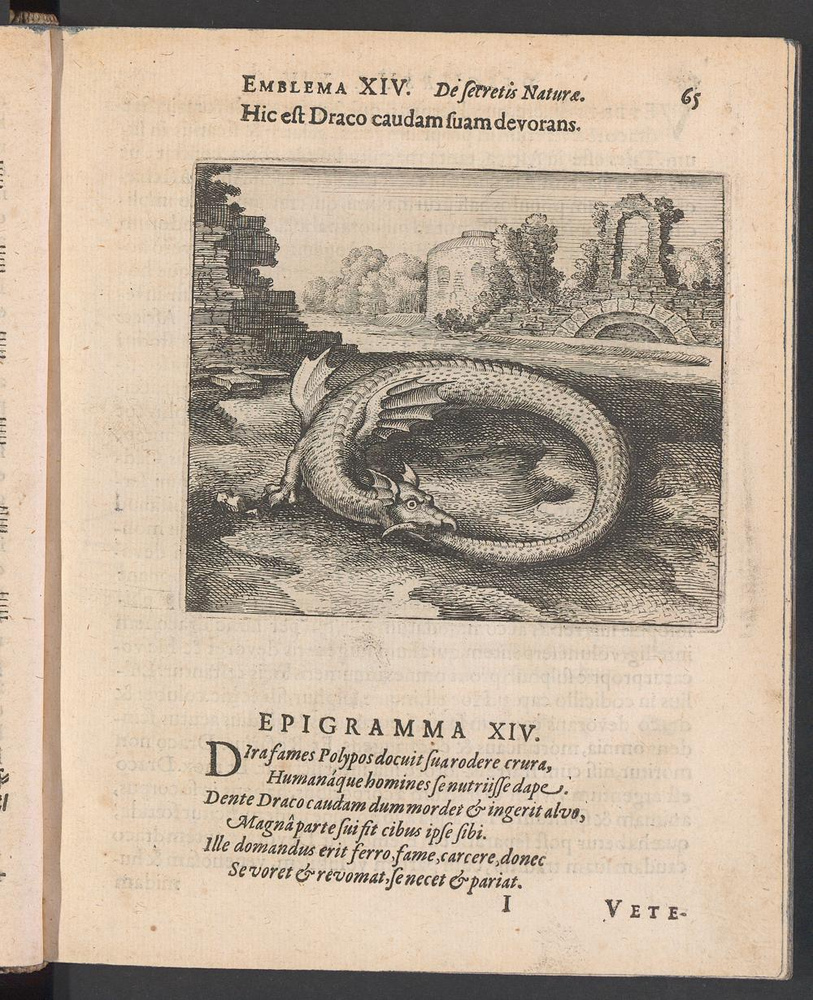 A23 ↗
Maker and date. Michael Maier (author); copperplate engraver not named in this e-rara record · 1617
Object and leaf. e-rara 1905969; leaf image 1906044; VD17 1:078836Y. Emblem 14; printed p. 65; IIIF canvas label 65; image ID 1906044
Context. The source itself identifies a dragon devouring its own tail: Emblema XIV, printed p. 65. This is an actual ouroboros image, rather than a generic circular creature. Its alchemical context is distinct from our proposed invitation to preserve and revisit a character detail.
Jung relation. Documented provenance: digitized copy held by Stiftung der Werke von C. G. Jung, Zürich. This register makes no claim that Jung used this particular plate. The proposed classroom relation is interpretive, not documentary evidence of Jung’s usage.
Credit and reuse. Michael Maier, Atalanta fugiens (Oppenheim, 1617), emblem 14, p. 65. Stiftung der Werke von C. G. Jung, Zürich; e-rara, https://doi.org/10.3931/e-rara-7300. Public Domain Mark. Public Domain Mark 1.0
Place and reason. Letter 5. The returning tail visually links the end of this packet with a reader-selected beginning. It supports continuity through revision without making a worm-to-hero ladder or mandating a final form.
Displayed detail. Letter 5 uses a detail [0.12, 0.23, 0.8, 0.4] of the full image, measured from its top-left corner as fractions of width and height.
https://www.e-rara.ch/cgj/content/titleinfo/1905969
https://www.e-rara.ch/download/webcache/1000/1906044
https://creativecommons.org/publicdomain/mark/1.0/
https://doi.org/10.3931/e-rara-7300
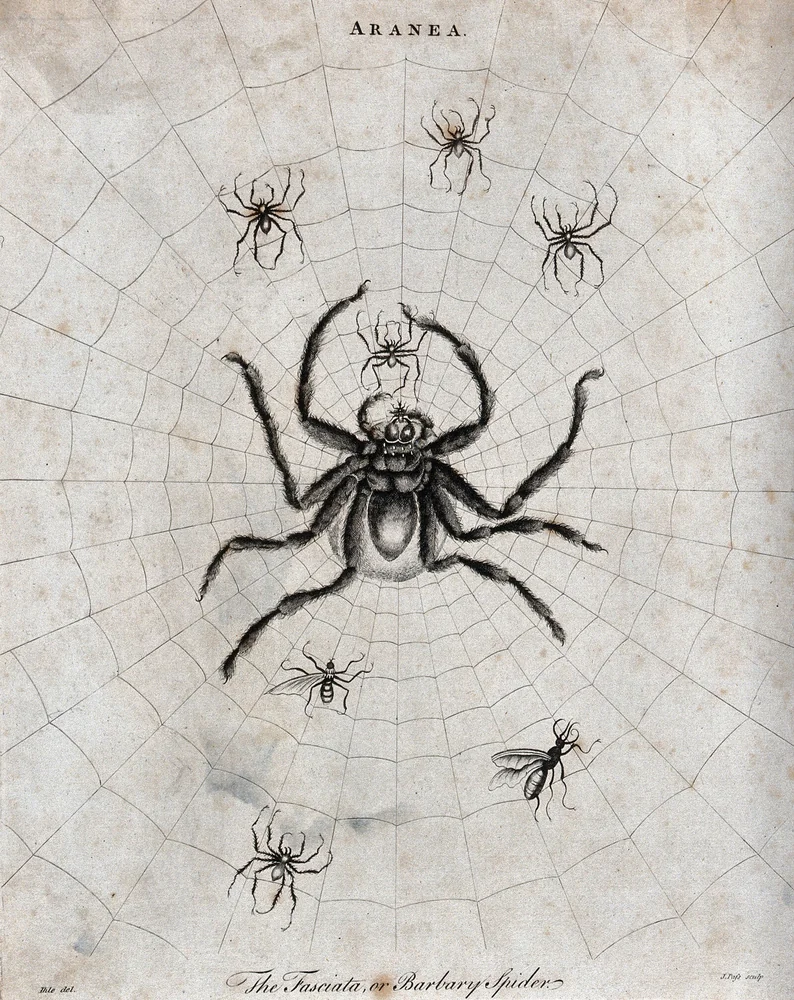
N07 · A large barbary spider with her young in her web. Etching by J. Pass, ca. 1796, after J. E. Ihle.
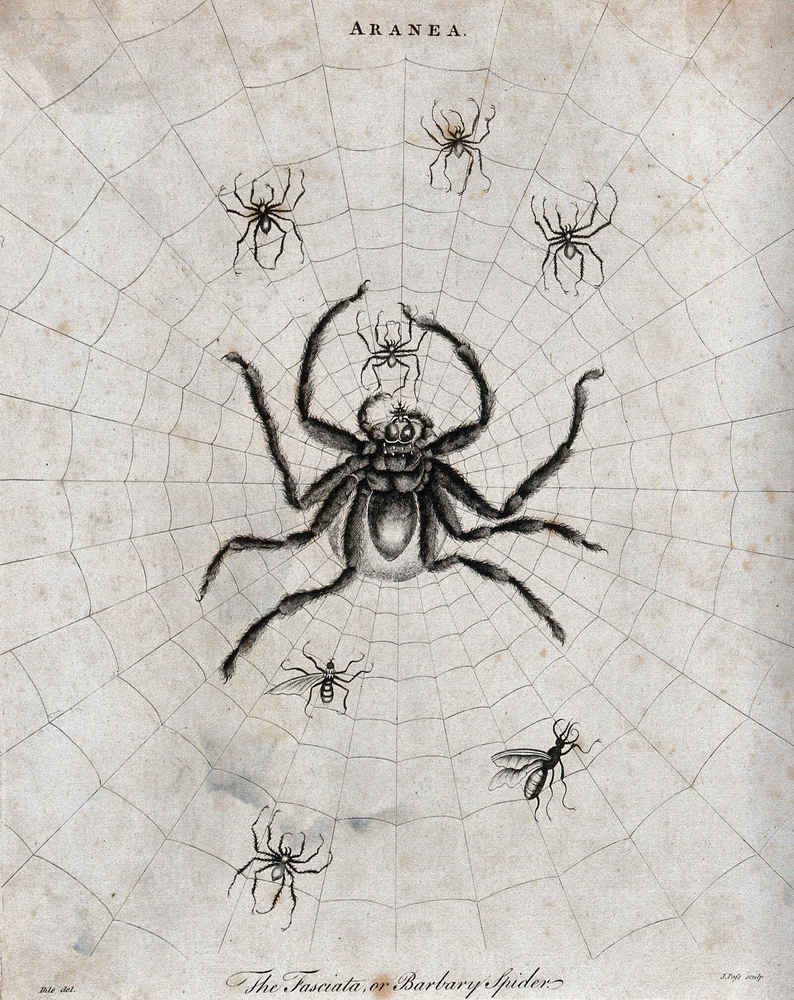 N07 ↗
Maker and date. J. Pass, engraver, after Johann-Eberhard Ihle; published by J. Wilkes · Ca. 1796; publication record gives [1 April 1796]
Object and leaf. Wellcome Collection 42418i; image V0022392; work xps9wtu7. Complete etching; lettering: Aranea; The fasciata, or barbary spider; Ihle del.; J. Pass sculp.
Context. The historical etching depicts the named spider, young spiders and other insects within a web. These literal relations are the source subject; a thread for listening or carrying a message is a proposed BB invention.
Jung relation. BB visual-design analogy only. No documented Jung-specific meaning is claimed for this image; the reader supplies any character meaning.
Credit and reuse. Wellcome Collection, 42418i / V0022392. Public Domain Mark
Place and reason. Letter 5. It makes distance and connection visible at the moment the child can respond to the interrupted answer, linking a chosen body or item to an action.
https://wellcomecollection.org/works/xps9wtu7
https://iiif.wellcomecollection.org/image/V0022392/full/1600,/0/default.jpg
https://creativecommons.org/publicdomain/mark/1.0/
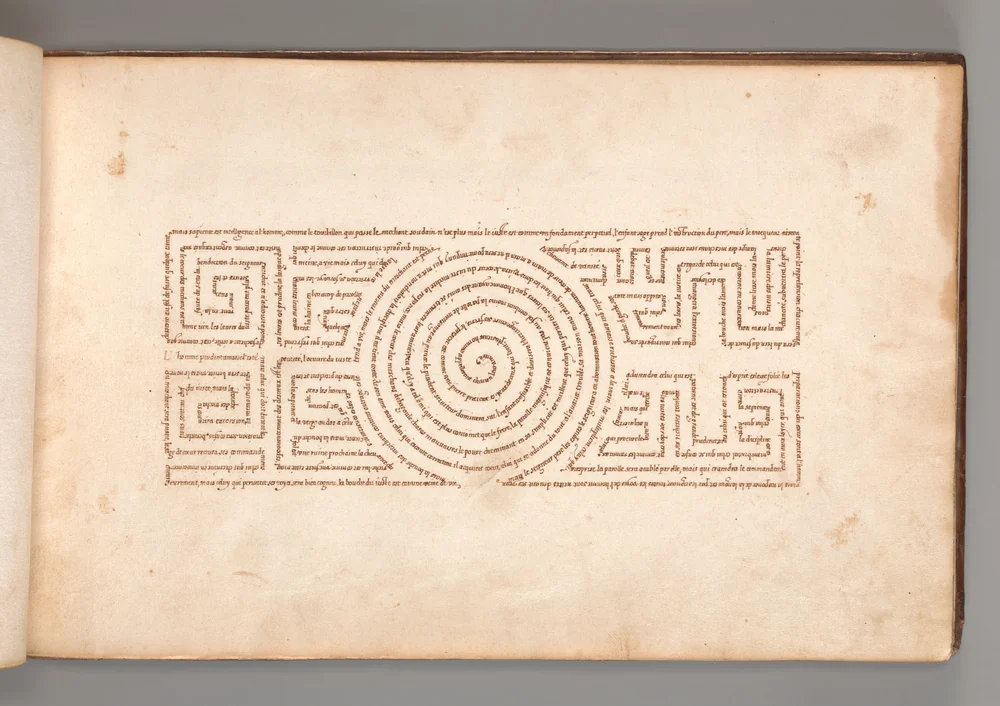
S05 · Micrographic Design in the Shape of a Labyrinth
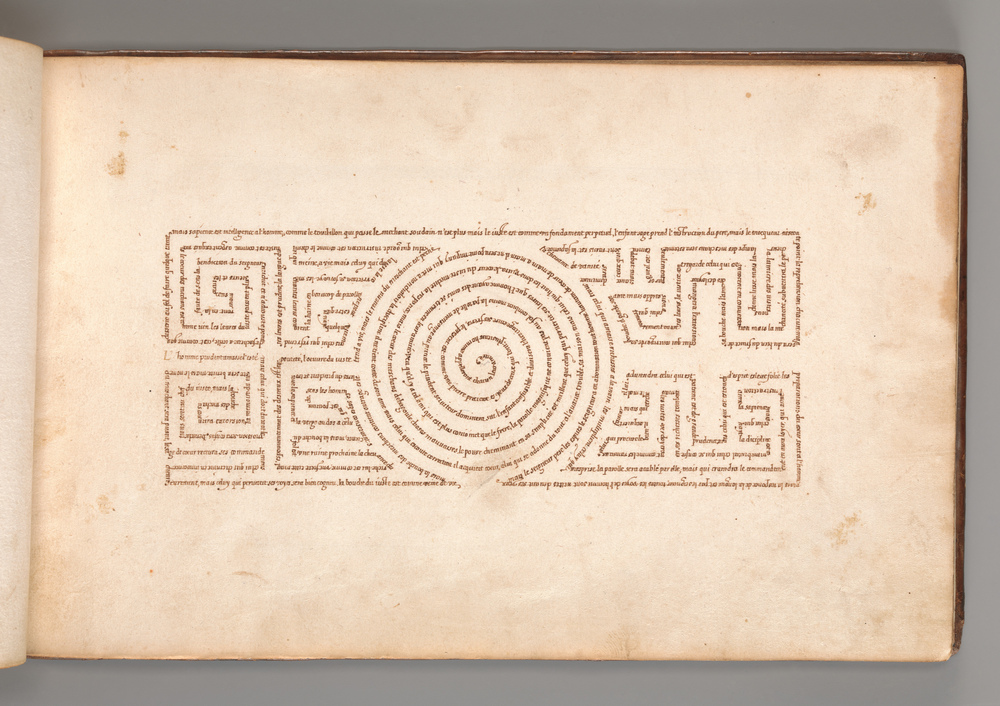 S05 ↗
Maker and date. Anonymous French or Flemish artist · early 17th century
Object and leaf. 2014.96(12). The Metropolitan Museum of Art, accession 2014.96(12); digital object 735626
Context. The Met dates this pen-and-ink micrographic labyrinth to the early 17th century. It is part of an album thought to have been produced in France or possibly Antwerp; the catalogue identifies cursive French writing arranged as the design.
Jung relation. Proposed BB design analogy; no evidence retrieved that Jung used this exact object. Historical context and the reader’s authored fictional meaning remain distinct.
Credit and reuse. Micrographic Design in the Shape of a Labyrinth. The Metropolitan Museum of Art, Purchase, Daniel Ergmann Gift, 2014, 2014.96(12). Public domain. Public domain; The Met Open Access (CC0)
Place and reason. Letter 5. Letter 5 asks for a mark that could remain after the meeting. Micrography makes writing itself a visible material trace, connecting the character’s action to parchment without a new questionnaire.
https://www.metmuseum.org/art/collection/search/735626
https://images.metmuseum.org/CRDImages/dp/original/DP-12235-026.jpg
https://creativecommons.org/publicdomain/zero/1.0/
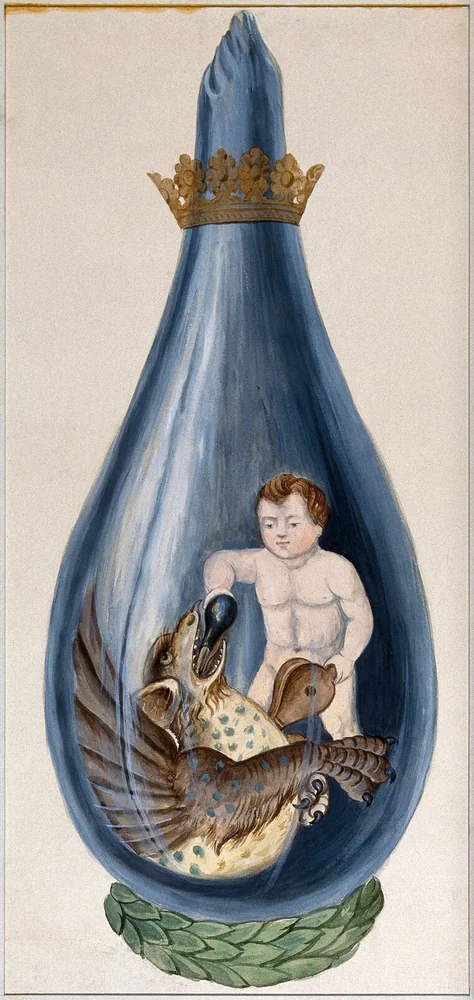
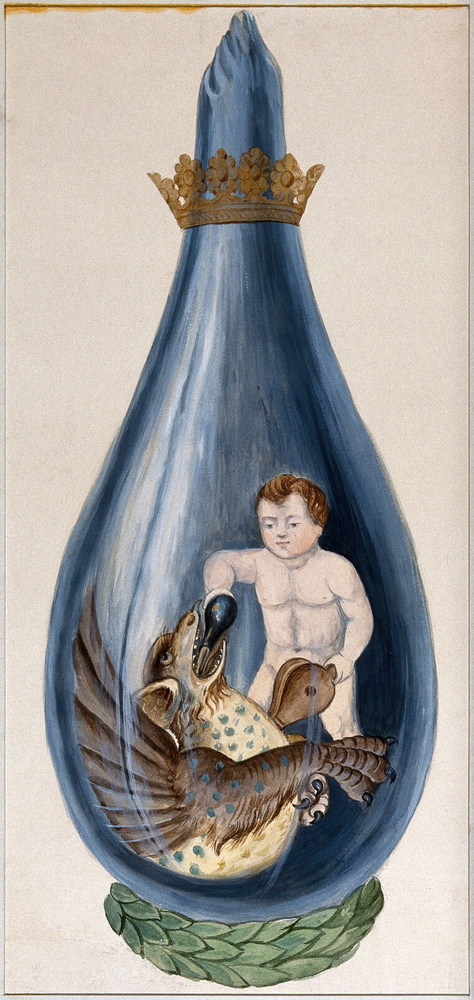
J07 · A putto pours a phial into a dragon's mouth, pumping a bellows with his other hand
 J07 ↗
Maker and date. Edith Annie Ibbs (1863–1937), after Splendor solis · 1900–1909; commissioned circa 1907
Object and leaf. Wellcome Collection 38820i
Context. Ibbs watercolour after Splendor solis, 1582, British Library Harley MS 3469. The catalogue identifies fixing volatile matter through fire.
Jung relation. Alchemical transformation imagery. No evidence retrieved that Jung used this particular Ibbs watercolour.
Credit and reuse. Edith Annie Ibbs, A putto pours a phial into a dragon's mouth, pumping a bellows with his other hand, 1900–1909, after Splendor solis. Wellcome Collection 38820i. Public Domain Mark. https://wellcomecollection.org/works/s2ev56x8 Public Domain Mark
Place and reason. Letter 5. The phial, dragon and bellows connect a chosen body or item with an action and a material result.
https://wellcomecollection.org/works/s2ev56x8
https://iiif.wellcomecollection.org/image/V0025635/full/760,/0/default.jpg
https://creativecommons.org/publicdomain/mark/1.0/
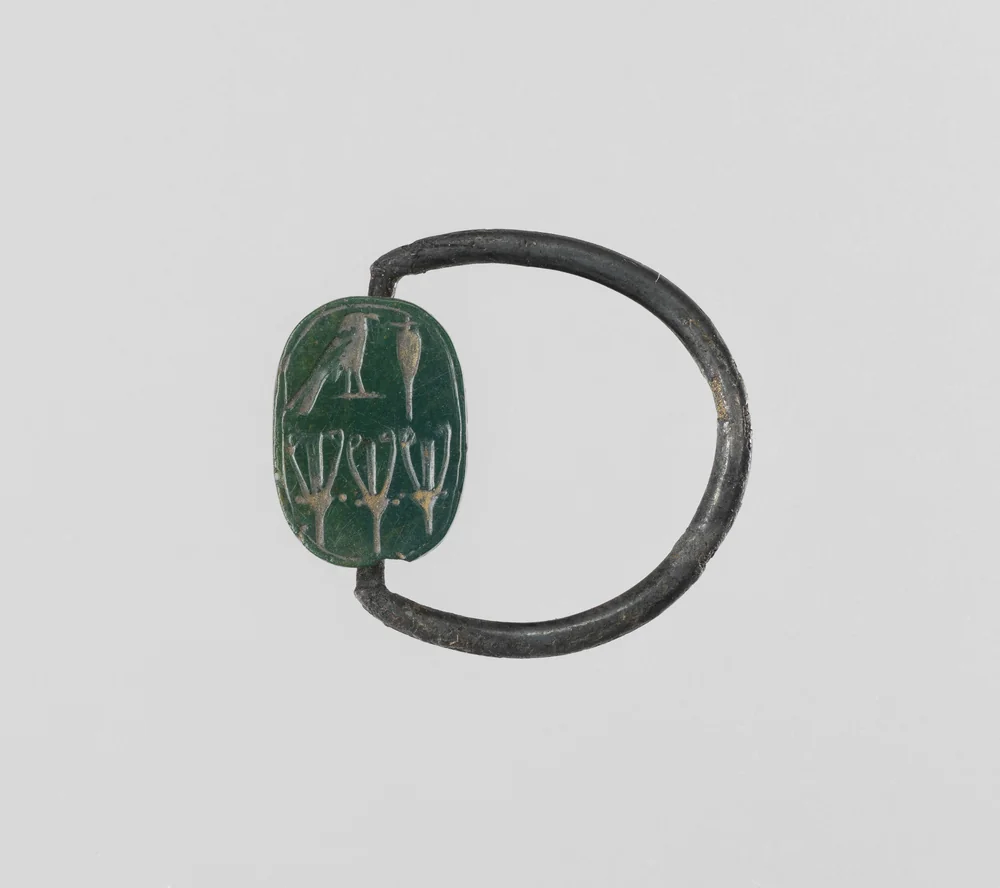
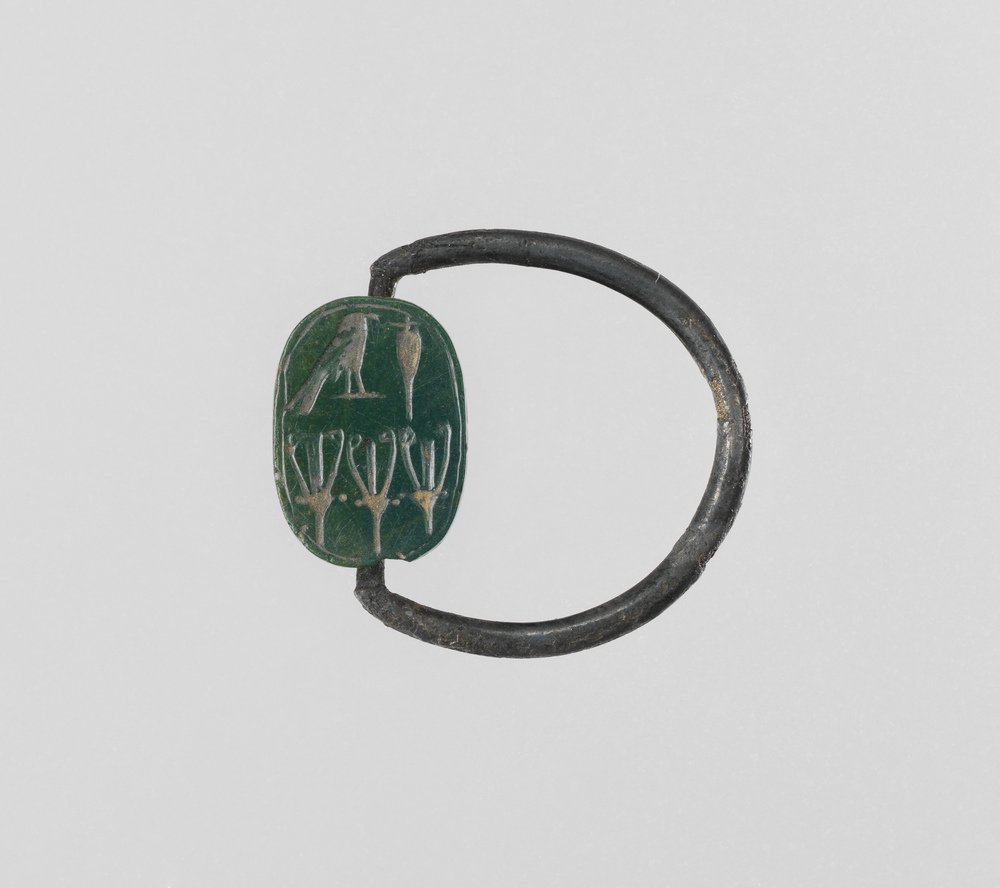
S08 · Signet ring
 S08 ↗
Maker and date. Unidentified Egyptian maker · ca. 1080–721 BCE
Object and leaf. 26.7.830. The Metropolitan Museum of Art, accession 26.7.830; digital object 553209
Context. The Met identifies this signet ring as Egyptian, Third Intermediate Period, Dynasty 21–24, ca. 1080–721 BCE. The green jasper plaque is mounted on a silver ring; the record gives accession 26.7.830.
Jung relation. Proposed BB design analogy; no evidence retrieved that Jung used this exact object. Historical context and the reader’s authored fictional meaning remain distinct.
Credit and reuse. Signet ring. The Metropolitan Museum of Art, Purchase, Edward S. Harkness Gift, 1926, 26.7.830. Public domain. Public domain; The Met Open Access (CC0)
Place and reason. Letter 5. The last letter asks how the reader would recognise the same character again. A signet is a concrete portable object with a marked surface, so it connects earlier naming with a trace that can recur during play.
https://www.metmuseum.org/art/collection/search/553209
https://images.metmuseum.org/CRDImages/eg/original/DP-30884-001.jpg
https://creativecommons.org/publicdomain/zero/1.0/
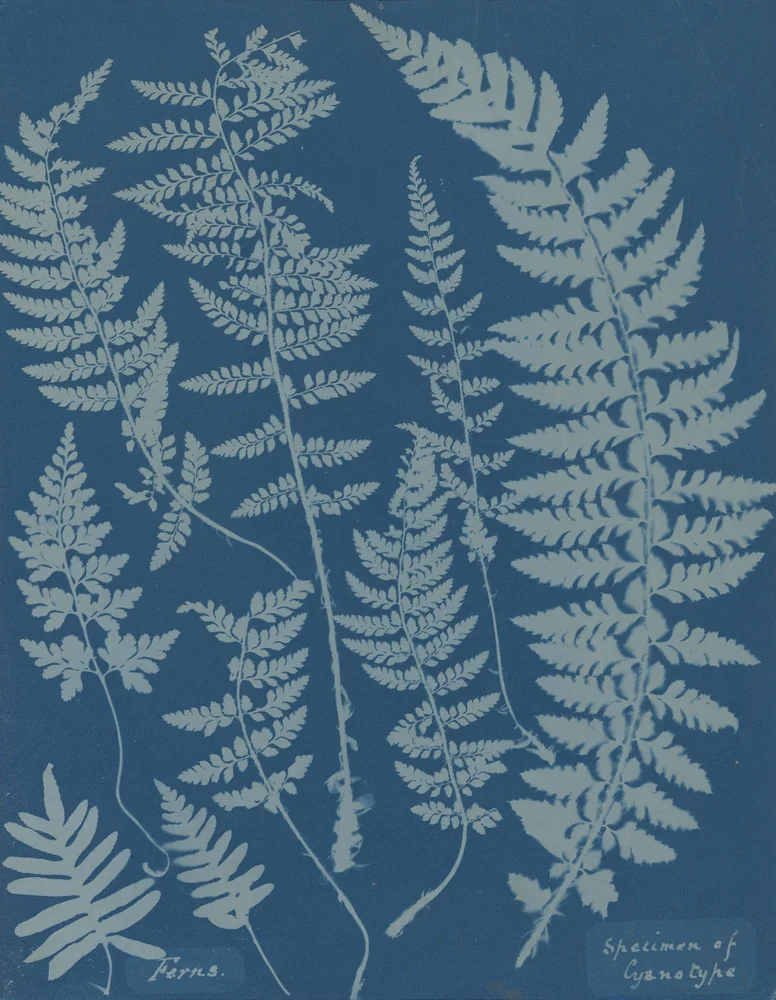
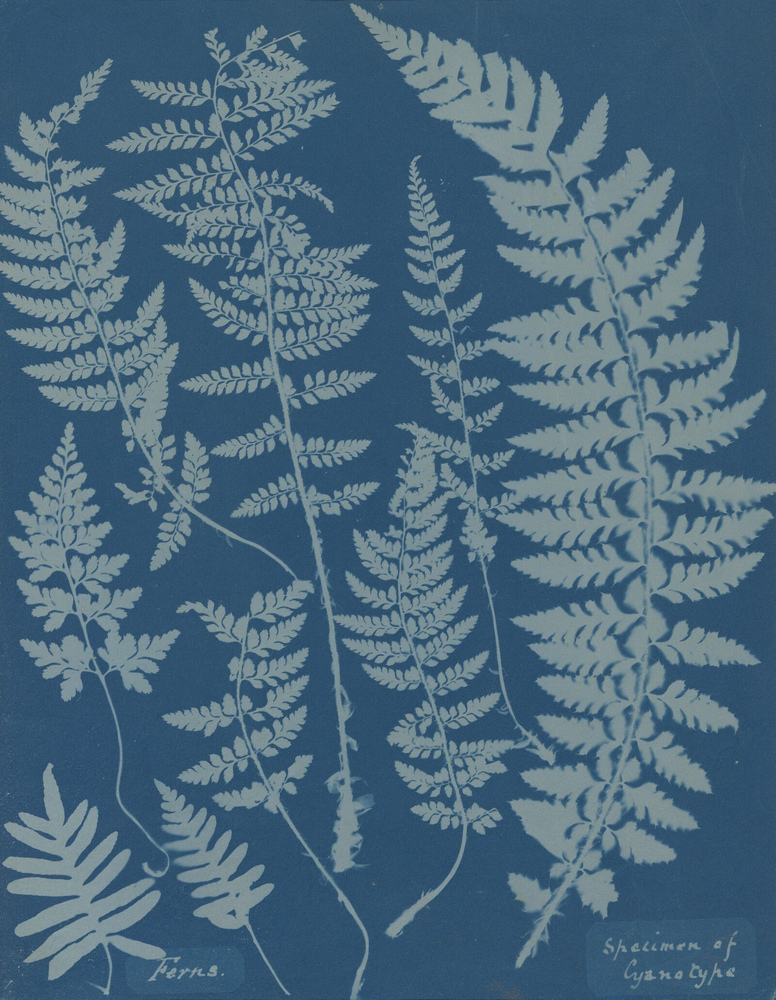
N04 · Ferns. Specimen of Cyanotype
 N04 ↗
Maker and date. Anna Atkins · 1840s
Object and leaf. National Gallery of Art 2007.15.1; artwork 136477. Complete cyanotype sheet, including the handwritten title; image service 4fa8d76f-1fb8-4d83-b63d-8a9e8e9d2483.
Context. The cyanotype presents overlapping fern outlines on a blue ground, with the title written on the sheet. Its botanical subject and photographic medium remain distinct from the fictional trace proposed here.
Jung relation. BB visual-design analogy only. No documented Jung-specific meaning is claimed for this image; the reader supplies any character meaning.
Credit and reuse. Anna Atkins, Ferns. Specimen of Cyanotype, 1840s. National Gallery of Art, Washington, R. K. Mellon Family Foundation, 2007.15.1. Public domain; institutional record says the media is free and in the public domain
Place and reason. Letter 5. The fern outlines give a nonverbal model for a recognizable trace exactly where the letter asks the child to leave one.
https://www.nga.gov/artworks/136477-ferns-specimen-cyanotype
https://api.nga.gov/iiif/4fa8d76f-1fb8-4d83-b63d-8a9e8e9d2483/full/1600,/0/default.jpg
https://www.nga.gov/terms-notices#open-access